Published: 1 August 2025 | Updated: 29 September 2026 | Author: Smart Vision Optometry
Editorial and clinical update — 29 September 2026: The original article/interview body below is retained in its editorial form, including its attributed quotations and narrative structure. Current evidence and clinical guidance are presented separately below and should be relied on where older wording or claims differ.
Many people assume that sight and vision are the same, but they are two distinct functions that work together to help us see, process, and understand the world.
According to Gary Rodney, Master of Optometry, Smart Vision Behavioural Optometrist, and Founder of the Smart Vision Optometry system, and Jacquie Gattegno, Orthokeratologist and Principal Optometrist at Eyes InDesign Smart Vision Optometry Bond, vision is about far more than just clarity—it involves how well the brain interprets visual information.
“A person may have perfect 20/20 eyesight but still struggle to read, focus, or understand what they see. That’s because vision is not just about how clearly we see—it’s about how efficiently the brain processes what the eyes capture,” explains Rodney.
Gattegno adds, “We often see children and adults experiencing headaches, eye strain, or difficulty concentrating, and they don’t realise that these symptoms could be linked to an underlying vision issue. Even if they can see clearly, their eyes and brain may not be working together as well as they should.”
The Difference Between Sight and Vision
Rodney explains that sight is the physical ability to see, whereas vision is the brain’s ability to interpret and make sense of what is seen.
How the Eyes and Brain Work Together
- Light enters the eye through the cornea, bending towards the retina.
- The retina captures the image and converts it into electrical signals.
- The optic nerve transmits these signals to the brain.
- The brain processes the information, turning it into a meaningful image.
“Your eyes are like a camera—they capture the image. But it’s your brain that develops the picture and allows you to understand what you’re seeing,” Rodney explains.
Gattegno adds, “If the brain struggles to process visual information properly, a person may experience difficulties in reading, movement, or depth perception, even if their eyesight appears fine in a standard test.”
The Role of the Brain in Vision Processing
The brain receives an estimated 34 gigabytes of visual data per day, but it can only process about 60 bits per second. This means that accuracy is essential, and even small visual processing errors can cause significant disruptions.
“Vision is a complex system. If any part of the process—from eye tracking to brain interpretation—is inefficient, it can lead to difficulties in learning, concentration, and everyday tasks,” says Rodney.
What Happens When Vision Skills Are Weak?
Many visual processing difficulties go unnoticed because they are not assessed in a standard 20/20 vision test. Gattegno highlights that when vision skills are underdeveloped, it can lead to:
- Struggles with reading and writing.
- Difficulty tracking words across a page.
- Poor hand-eye coordination and balance issues.
- Frequent headaches, dizziness, or eye strain.
“A child who avoids reading or struggles with copying from the board may not have a learning disability—they may have a vision problem that makes these tasks exhausting,” says Gattegno.
1. Visual Processing Delays
If the brain misinterprets visual input, it can cause:
- Confusion between similar letters (e.g., ‘b’ and ‘d’).
- Difficulty recognising words or symbols.
- Slow reading and reduced comprehension.
“When a child is struggling to keep up in class, vision processing delays are often overlooked. It’s important to check whether their brain is correctly interpreting what their eyes are seeing,” explains Rodney.
2. Eye Teaming and Tracking Issues
For efficient vision, both eyes must work together seamlessly. Weaknesses in this area can lead to:
- Losing place while reading.
- Skipping words or lines of text.
- Poor depth perception, affecting sports and coordination.
“Tracking and teaming issues don’t just affect reading—they can impact everything from playing sport to navigating a crowded classroom,” says Gattegno.
3. Visual Attention and Focus Problems
Shifting focus between near and far objects is essential for classroom learning and everyday tasks. Weakness in this area can cause:
- Difficulty copying from the board.
- Blurry vision when switching focus.
- Struggles with sustained attention and concentration.
“When a child finds it exhausting to focus in class, they may be misdiagnosed with attention issues when, in fact, they have a vision problem that needs addressing,” says Rodney.
The Importance of Comprehensive Vision Assessments
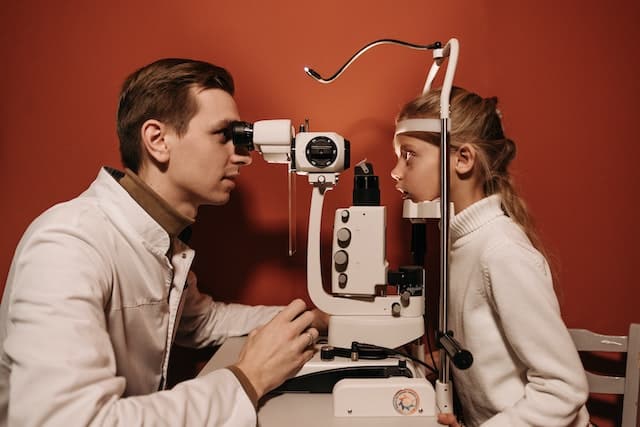
Many vision issues go undiagnosed because standard eye tests only measure clarity. A behavioural optometry assessment evaluates:
- How well the eyes track, team, and focus.
- How efficiently the brain processes visual information.
- Whether vision is impacting learning and performance.
“A 20/20 eye test doesn’t tell the full story. It’s crucial to assess how well the eyes and brain work together to identify any hidden visual challenges,” explains Rodney.
Gattegno agrees, adding, “When we detect and treat vision processing issues early, we can help children and adults overcome barriers to learning, concentration, and confidence.”
Strengthening Vision with Therapy and Daily Habits
1. Vision Therapy
Vision therapy is a structured program that helps train the brain and eyes to work together more efficiently.
“Think of vision therapy as physiotherapy for the eyes. It strengthens weak areas of vision processing, improving focus, tracking, and comprehension,” says Rodney.
2. Screen Breaks and Outdoor Time
Prolonged screen use can cause digital eye strain and focusing difficulties. To protect vision:
- Follow the 20-20-20 rule: Every 20 minutes, look at something 20 feet away for 20 seconds.
- Spend at least 90 minutes outdoors daily to reduce myopia risk.
“We live in a digital world, but our eyes aren’t designed for constant screen use. Regular breaks and outdoor time are crucial for maintaining healthy vision,” says Gattegno.
3. Nutrition for Eye Health
A nutrient-rich diet supports long-term vision health. Include:
- Leafy greens (rich in lutein for retinal protection).
- Omega-3 fatty acids (found in fish, reducing inflammation).
- Vitamin A (supports night vision and eye function).
“What we eat plays a big role in maintaining strong vision. A balanced diet, combined with good visual habits, helps keep eyes and brain functioning optimally,” says Rodney.
Take the Next Step in Protecting Your Vision
If you or your child experience eye strain, reading difficulties, or concentration issues, a comprehensive vision assessment may uncover hidden visual processing problems.
For more information on vision therapy and its benefits, visit Smart Vision Optometry’s website. To learn about myopia prevention and treatment, visit Myopia Prevention or explore Orthokeratology in Sydney.
Take the next step and book an appointment, or call the Bondi clinic on (02) 9365 5047 or the Mosman clinic on (02) 9969 1600. Experience the difference a holistic approach to vision care can make. Contact Smart Vision Optometry today to see the world in a new way.
Current evidence and clinical context
Healthdirect describes eye examinations that may assess clarity, eye movements, coordination and eye health. A comprehensive routine examination is not limited to an eye chart; tests depend on individual findings and risks.
In the NEI-supported CITT-ART trial, treating convergence insufficiency did not improve standardised reading performance more than placebo. The original interview’s broad claims about processing, comprehension and attention are not established by that trial. Persistent learning concerns also need appropriate educational assessment.
Related Smart Vision reading
A comprehensive approach to vision · Vision, learning and dyslexia
Frequently asked questions
What does an eye-chart result tell me?
It measures visual acuity at the tested distance. It does not, by itself, describe every aspect of eye health or coordination.
Can a routine eye examination assess more than clarity?
Yes. Depending on your needs, an optometrist can assess eye movements, coordination and the health of the eyes.
Does treating an eye-coordination problem guarantee better reading?
No. In the CITT-ART trial, treatment did not improve standardised reading scores more than placebo. Learning concerns need their own assessment.