
Screen Time Surge Linked to Rising Digital Eye Strain in Children
From online learning platforms to smartphones and gaming devices, Australian families are spending more time than ever focusing on near tasks.
Myopia (short-sightedness), once considered a simple refractive inconvenience, is increasingly recognised as a progressive eye condition with potential long-term health implications.
In today’s digital‑intensive world, vision isn’t just about seeing in the distance — it’s about managing screens, near‑work, mixed lighting, multiple devices, extended hours and fatigue.
The prevalence of myopia (near‑sightedness) is rising worldwide, and with it, the importance of early intervention and long‑term wellness care.
Protecting Vision Through Early Detection Diabetes affects more than blood sugar levels—it poses significant risks to eye health. For those living with diabetes, regular eye exams should be a non-negotiable part of their health routine. “Diabetes can lead to serious complications, including vision loss, but timely screenings and treatment make a world of difference,” says…
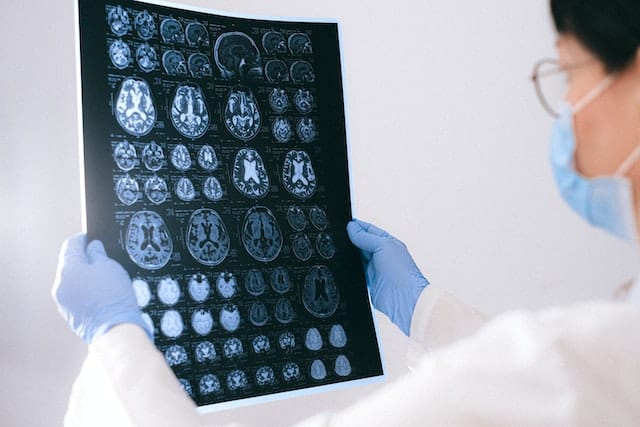
Unveiling the Complex Network Behind Sight Sight may begin with the eyes, but it’s the brain that makes sense of what we see. From directing the eyes to focus on an object to interpreting and storing visual information, the brain plays an essential role in vision. However, this intricate process often goes unnoticed. Gary Rodney,…
Short-Sighted Athletes Can Succeed With 32% of the world’s population affected by myopia, it’s no surprise that short-sighted individuals can be found in every field, including sports. Yet, the stereotype persists that clear vision is a prerequisite for athletic success, leaving many myopic individuals hesitant to pursue sports. “Being short-sighted doesn’t mean giving up on…
Understanding Workplace Hazards to Eye Health Every occupation comes with risks, but some of the most overlooked involve our vision. Whether the danger is from environmental factors or prolonged tasks, the impact on eye health can be significant if not addressed. “At Eyes InDesign, we work with patients from various industries and help them manage…
The Magic of Orthokeratology It’s called Orthokeratology, or Ortho-K, and it involves using contact lenses. But instead of wearing contacts by day, explains Gary Rodney, founder of Smart Vision Optometry in Sydney and Fellow of the International Academy of Orthokeratology and Myopia Control (FIAOMC), they are worn while you sleep. Orthokeratology is designed to guide…
Irlen Syndrome is a visual perception processing disorder. According to statistics, Irlen Syndrome is identified and treated appropriately, in one in two children and adults worldwide with learning and perception issues. However, leaders in the field of behavioural optometry, like Gary Rodney a fellow of the International Academy of Orthokeratology and Myopia Control (FIAOMC), are now debating whether these figures really reflect the causes of perception issues or whether they are the outcome of incorrect diagnoses brought on by subpar eye exams.
Gary Rodney, Master of Optometry and Fellow of the International Academy of Orthokeratology and Myopia Control (FIAOMC) based at the Smart Vision Optometry Eyes InDesign Mosman clinic, explains the reasons for eye floaters as well as ways they can be treated.
Gary Rodney, a Smart Vision Behavioural Optometrist at Eyes InDesign Mosman, raises awareness of CVI as it is one of the leading causes of blindness in children and more attention should be paid towards it. Adults can also develop CVI after a traumatic brain injury. This is known as acquired CVI.
Jacqueline Gattegno, a Smart Vision Behavioural Optometrist at Eyes InDesign Bondi, sheds light on the different kinds of eye twitches. “Eye twitches can be classified into three types. The first is a general eye spasm, the second is a Benign Essential Blepharospasm and the third is a Hemifacial Spasm,” explains Jacqueline.
Jacqueline Gattegno, a Smart Vision Behavioural Optometrist at Eyes InDesign Bondi, provides information that can help people cope with, or avoid the problem of eye allergies this spring.
Jacqueline Gattegno, a Smart Vision Behavioural Optometrist at Eyes InDesign Bondi states the importance of raising awareness of Hypertropia as very few people know about this condition. Even though it is uncommon, it is still important for people to know the symptoms, causes and treatments.
Jacqueline Gattegno, a Smart Vision Behavioural Optometrist at Eyes InDesign Bondi expresses the importance of staying hydrated and how integral it is for the whole body including the eyes!
Jacqueline Gattegno, a Smart Vision Optometrist at Eyes InDesign Bondi, stresses the importance of proper eye protection and treatment from the effects of digital eye-strain. “Digital eye-strain occurs from the increased use of computers, iPads, mobile phones and computer gaming. It’s a major issue which is not exclusive to adults. Eye-strain in children and teenagers may affect normal vision development and the side effects can be debilitating if left untreated,” says Jacquie.
We all know that a child’s development can vary immensely from child to child. It is perhaps not as well known that a child’s vision also develops over time and can also vary from child to child.
Jacqueline Gattegno, a leading Smart Vision Optometrist at Eyes InDesign Bondi, explains the relationship between vision and learning; and why it is so important for parents to understand the difference between sight and vision.
Jacqueline Gattegno, a leading Smart Vision Optometrist at Eyes InDesign Bondi, explains the importance of sunglasses, with a specific focus on the importance of using them from a young age. “Regardless of whether it is winter or summer, cloudy or sunny, the naked eyes are always being exposed to Ultra Violet (UV) rays,” says Jacquie.
Jacqueline Gattegno, a Smart Vision Optometrist at Eyes InDesign Bondi, expands on the importance of healthy vision. “There are approximately 2.2 billion people globally with near or distance-related vision impairment. In approximately half of these cases, vision impairment could have been prevented, or identified early with a regular visit to a Smart Vision Optometrist,” says Jacquie.
End of content
End of content