Published: 1 September 2025 | Updated: 28 September 2026 | Author: Smart Vision Optometry
Editorial and clinical update — 30 September 2026: The original article/interview body below is retained in its editorial form, including its attributed quotations and narrative structure. Current cataract and myopia evidence is presented separately below and should be relied on where older statistics, risk estimates or causal wording differ.
Both myopia (short-sightedness) and cataracts are among the most common visual impairments worldwide. With myopia affecting nearly 3 billion people globally—a number expected to rise to 5 billion by 2050—and cataracts responsible for 51% of blindness cases, these conditions significantly impact vision health. But is there a connection between the two?
According to Gary Rodney, Master of Optometry, Smart Vision Behavioural Optometrist, and Fellow of the International Academy of Orthokeratology and Myopia Control (FIAOMC), and Jacquie Gattegno, Orthokeratologist and Principal Optometrist at Eyes InDesign Smart Vision Optometry Bondi, the link between myopia and cataracts is undeniable. Not only can high myopia increase the risk of cataract formation, but the presence of cataracts can also cause a shift in vision towards myopia.
“We know that both conditions affect clarity of vision, but what many people don’t realise is how closely they are intertwined,” says Rodney. “High myopia has been associated with an increased risk of developing cataracts earlier in life, while cataracts themselves can trigger a refractive shift that mimics myopia.”
Gattegno adds, “Understanding this relationship is critical because it allows us to take a proactive approach in managing both conditions before they severely impact quality of life.”
How Myopia Contributes to Cataract Development
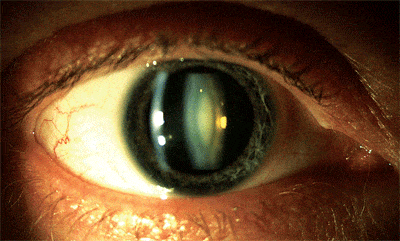
Cataracts occur when proteins in the eye’s natural lens clump together, causing clouding and blurriness. This process is often seen as a natural part of ageing, but high myopia has been linked to an increased risk of early cataract formation.
1. Increased Risk of Cataracts in High Myopia
- Studies show that people with high myopia (greater than -6.00D) have double the risk of developing cataracts compared to those with normal vision.
- High myopia changes the structure of the eye, making the lens more susceptible to degeneration.
- The longer axial length of a myopic eye may put added stress on the lens, contributing to cataract formation earlier in life.
“The earlier someone develops high myopia, the greater their risk of experiencing cataract-related vision issues in middle age rather than in their senior years,” explains Rodney.
2. Myopic Shift Due to Cataracts
As cataracts develop, they can cause a refractive change known as a myopic shift. This means:
- Some individuals may temporarily regain the ability to see up close without reading glasses.
- This phenomenon, known as “Second Sight,” is only temporary and disappears as the cataract worsens.
- Nuclear cataracts, which develop in the centre of the lens, are most commonly associated with this shift.
“Some elderly patients suddenly find they don’t need reading glasses anymore, and they believe their vision is improving. Unfortunately, this is a misleading reprieve, as the cataract continues to progress and eventually worsens vision overall,” says Gattegno.
Types of Cataracts and Their Relationship to Myopia
There are three main types of cataracts, all of which can affect myopic vision differently.
1. Nuclear Cataracts (Most linked to myopia)
- Develops in the centre of the lens.
- Causes progressive myopic shift, giving temporary improvement in near vision.
- Common in people with high myopia.
2. Cortical Cataracts
- Forms in the outer edges of the lens, progressing towards the centre.
- Creates glare and halos, affecting contrast sensitivity.
- Can worsen visual distortions already present in myopia.
3. Posterior Subcapsular Cataracts
- Develops at the back of the lens, directly blocking light from reaching the retina.
- Causes rapid deterioration of vision, affecting both near and distance sight.
- Can intensify myopic blur, making vision correction more complex.
Gattegno notes, “We often see myopic patients who develop nuclear cataracts experience gradual nearsightedness, which can be confusing because it mimics the progression of their existing myopia. This is why regular eye exams are essential—so we can determine whether changes in vision are due to worsening myopia or cataract formation.”
Challenges in Cataract Surgery for Myopic Patients
While cataract surgery is a highly successful procedure, myopic patients face unique risks and complications due to the structural differences in their eyes.
1. Increased Risk of Retinal Detachment
- Myopic eyes are longer and more stretched, making the retina thinner and more fragile.
- Cataract surgery can increase the risk of retinal detachment, especially in patients with high myopia.
“We always advise myopic patients undergoing cataract surgery to be closely monitored for signs of retinal detachment, which can lead to permanent vision loss if not treated immediately,” says Rodney.
2. Variability in Post-Surgical Vision Correction
- Standard intraocular lens (IOL) implants may not always match the exact prescription needed for myopic patients.
- Some patients require additional surgery or specialised IOLs to fine-tune their vision after cataract removal.
“Unlike non-myopic patients, those with high myopia may need extra care in selecting the right lens implant, as even small miscalculations can impact post-surgery vision clarity,” explains Gattegno.
Preventing Cataracts and Managing Myopia Together
While cataracts cannot always be prevented, managing myopia progression early can reduce the risk of severe visual impairment later in life.
1. Myopia Control Strategies
- Orthokeratology (Ortho-K): Specialised overnight lenses that reshape the cornea and slow myopia progression.
- Multifocal Contact Lenses: Reduce strain and help control how the eye grows over time.
- Atropine Eye Drops: Used to slow down myopia progression in children.
“Controlling myopia from an early age can delay or even reduce the risk of cataract-related complications later in life,” says Rodney.
2. Lifestyle Modifications
- Increase outdoor exposure: Spending 90+ minutes outdoors daily reduces the risk of developing myopia.
- Limit screen time: Prolonged close-up work increases myopia progression and may contribute to earlier cataract formation.
- Wear UV protection: UV light exposure can accelerate cataract formation, so wearing sunglasses is crucial.
“Small lifestyle adjustments, such as spending more time outdoors and reducing excessive screen use, can make a big difference in maintaining long-term eye health,” Gattegno advises.
Regular Eye Exams Are Essential
Since both myopia and cataracts impact vision over time, routine comprehensive eye exams are the best way to:
✔ Detect cataract formation before vision worsens.
✔ Monitor myopia progression and implement early interventions.
✔ Identify potential surgical risks in myopic patients needing cataract removal.
“Cataracts and myopia are both treatable conditions, but early detection and management are key. By staying proactive, we can help patients maintain the best possible vision throughout their lives,” says Rodney.
Gattegno agrees, adding, “Whether you’re managing myopia, concerned about cataracts, or both, the most important step is to get regular eye check-ups. The earlier we catch changes in your vision, the better we can preserve your sight for the future.”
Take Control of Your Eye Health Today
If you have myopia, cataracts, or concerns about your vision, book an appointment, or call the Bondi clinic on (02) 9365 5047 or the Mosman clinic on (02) 9969 1600. Experience the difference a holistic approach to vision care can make. Contact Smart Vision Optometry today to see the world in a new way.
Current evidence and clinical context
A cataract is clouding of the eye’s normally clear lens and can cause blurred vision, glare, haloes and reduced contrast. Healthdirect Australia’s cataract guidance explains common symptoms, risk factors and treatment.
The relationship between myopia and cataract is an association rather than a simple cause-and-effect rule. The population-based Blue Mountains Eye Study found evidence linking myopia with incident cataract and cataract surgery after adjustment for several other factors. A later longitudinal analysis found that myopia was associated with a higher incidence of nuclear and posterior subcapsular cataract.
Cataract-related lens changes can also alter refraction and produce a shift towards myopia, sometimes temporarily improving unaided near vision while overall clarity worsens. People with high myopia may need particular attention to retinal health and lens-power planning if cataract surgery is being considered. An ophthalmologist can explain the individual risks and expected refractive outcome.
Related Smart Vision reading
Myopia and cataracts explained · Myopic macular degeneration · Eyes after 40 and warning signs
Frequently asked questions
Does myopia cause cataracts?
Not in a simple one-to-one way. Population studies show an association between myopia and some cataract types, but an individual person’s risk depends on multiple factors.
Can a cataract make a glasses prescription more short-sighted?
Yes. Changes in the natural lens, particularly with some nuclear cataracts, can shift refraction towards myopia.
Does high myopia affect cataract-surgery planning?
It can. Axial length, retinal health, previous retinal treatment and lens-power calculations may require additional attention. An ophthalmologist can explain the individual risks and expected refractive result.