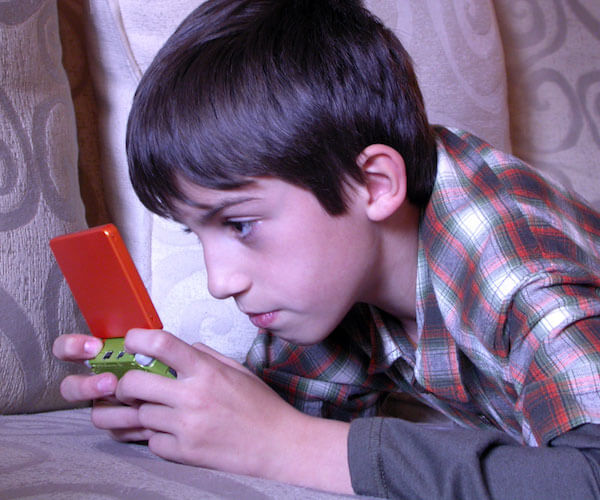
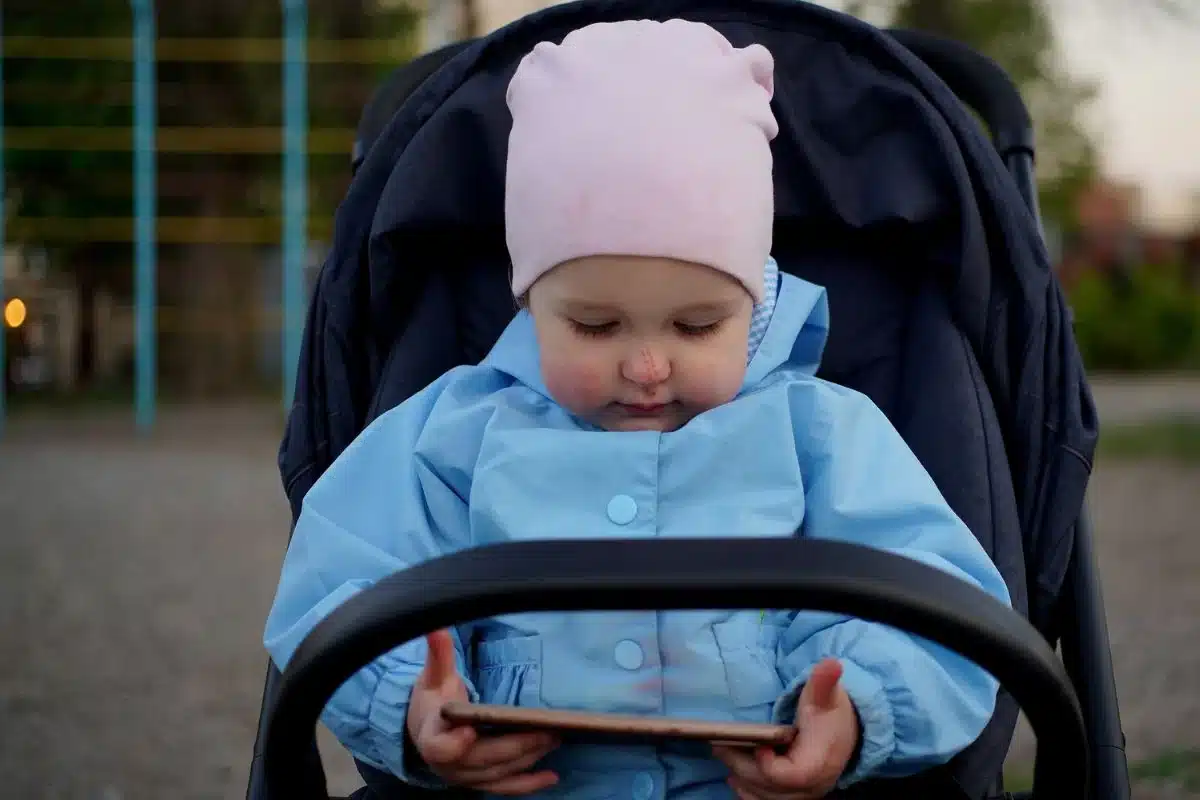
Reports of babies and toddlers being given mobile phones and tablets in prams as a distraction while parents shop have shocked Australian optometrists Gary Rodney and Jacqueline Gattegno.
As a Master of Optometry, Smart Vision Behavioural Optometrist, and Fellow of the International Academy of Orthokeratology and Myopia Control (FIAOMC), Rodney has spent years studying myopia control and the effects of screen time on children’s vision.
“I don’t blame parents for this trend,” says Rodney. “Many simply don’t realise how early eye development begins and how excessive screen time at such a young age could put their child at greater risk of vision problems later in life.”
Rodney and Jacquie Gattegno, Orthokeratologist and Principal Optometrist at Eyes InDesign Smart Vision Optometry Bondi, warn that prolonged exposure to digital screens in infancy could contribute to myopia (short-sightedness)—a condition expected to affect half of the world’s population by 2050.
“We need to rethink how we introduce screens to children. Babies’ eyes are still developing, and too much screen exposure too early can interfere with that process,” says Gattegno.
How Screen Time in Prams Affects a Baby’s Eyes
Rodney explains that a baby’s vision is not fully developed at birth. Newborns are naturally short-sighted, meaning they can only see clearly up to 30 cm away—just enough to recognise their parents’ faces during close interactions.
“In a natural environment, a baby’s vision develops gradually as they explore the world, focusing on different distances and processing new images,” Rodney explains. “When you introduce screens too early, that process is altered, limiting their visual experience and possibly reinforcing short-sightedness.”
1. Myopia Risk from Early Screen Exposure
Studies suggest that excessive screen time and limited outdoor exposure are two major factors in the rising prevalence of myopia.
- The American Academy of Paediatrics recommends that children under two years old should not be exposed to screens at all.
- For children older than two, screen time should be limited to a maximum of two hours per day.
- Babies’ eyes need a range of visual experiences—focusing on near and far objects, moving their gaze naturally, and being exposed to outdoor light.
“Giving a baby a screen in a pram may seem harmless, but it’s reinforcing a very limited visual experience—one that encourages excessive near-focus without any depth perception,” says Gattegno.
2. Delayed Eye Development and Visual Fatigue
When babies spend too much time focusing on a bright, static screen at close range, they are not engaging in normal visual activities, such as:
✔ Tracking moving objects.
✔ Adjusting focus between different distances.
✔ Learning to process a range of colours, contrasts, and natural lighting conditions.
“A baby staring at a screen in a pram isn’t getting the visual stimulation they need to develop healthy vision. Instead, they’re being exposed to artificial blue light, which may cause eye strain and disrupt sleep cycles,” Rodney explains.
Gattegno adds, “Babies’ developing eyes are especially sensitive to blue light, and prolonged exposure could increase digital eye strain even before they start school.”
From Babyhood to School Starts The Long-Term Impact of Myopia
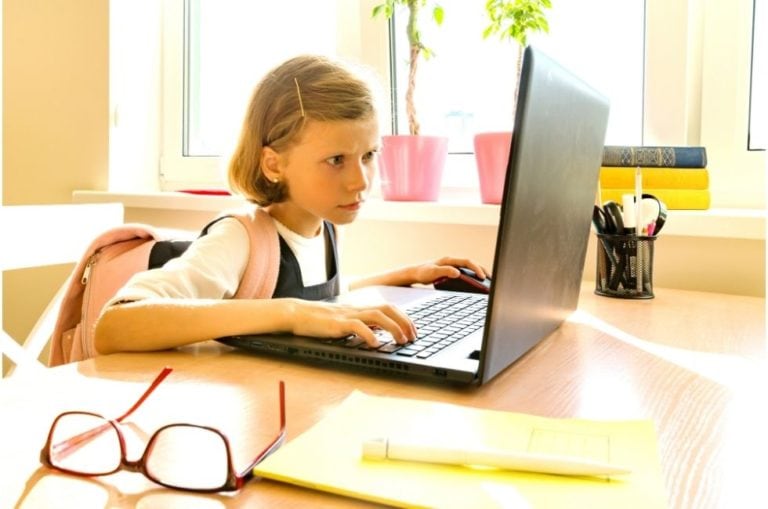
The effects of early screen exposure don’t just stop in infancy—they can have long-term consequences on how a child learns and interacts with the world.
1. Difficulty Seeing the Whiteboard at School
As children grow, those with undiagnosed myopia may:
- Struggle to see the board or teacher from a distance.
- Squint frequently or complain of blurred vision.
- Avoid tasks that require long-distance focus, such as sports.
“Children with myopia often don’t realise they’re seeing differently from their peers,” says Rodney. “For them, the world beyond a few feet away has always been blurry, so they assume that’s normal.”
2. Learning and Behavioural Challenges
Because so much of classroom learning is visual, undiagnosed myopia can lead to:
- Reduced attention span—if a child can’t clearly see, they may disengage.
- Misdiagnosed learning difficulties—blurred vision can mimic symptoms of ADHD or dyslexia.
- Frustration and lack of confidence in schoolwork and reading.
“If a child is struggling in school, we always recommend a comprehensive vision assessment to rule out underlying vision issues before assuming it’s a learning disorder,” Gattegno advises.
3. Progression to High Myopia and Eye Disease Risks
Without intervention, myopia tends to worsen through childhood and adolescence, potentially leading to high myopia (above -6.00D).
- High myopia significantly increases the risk of sight-threatening conditions, including:
- Retinal detachment.
- Glaucoma.
- Myopic macular degeneration.
“Early intervention is key. The earlier we identify myopia, the better we can slow its progression and reduce the risks of severe eye disease later in life,” says Rodney.
What Parents Can Do: Healthier Habits for Developing Eyes
1. Follow Age-Appropriate Screen Guidelines
- Under 2 years old: Avoid screens entirely where possible.
- Ages 2-5: Limit screen time to one hour per day and prioritise interactive, educational content over passive viewing.
- Ages 6 and up: Encourage balanced screen time, with breaks every 20 minutes using the 20-20-20 rule (look at something 20 feet away for 20 seconds every 20 minutes).
“Screens are not inherently bad, but their use should be age-appropriate. Babies and young children need real-world visual experiences, not digital ones,” Gattegno says.
2. Prioritise Outdoor Play
Research shows that spending at least 90 minutes outdoors daily can help reduce the risk of developing myopia.
“Natural sunlight plays a crucial role in regulating eye growth and reducing myopia risk,” explains Rodney. “Encouraging outdoor play—even just a daily walk in the park—can help protect a child’s vision in the long run.”
3. Schedule Regular Eye Exams
✔ Children should have their first eye exam by age 6 months, followed by another at age 3 years.
✔ School-age children should have annual eye tests, even if they don’t report vision problems.
“Many parents wait until their child complains about vision issues, but the best approach is preventative care. Regular check-ups help us catch potential problems before they impact learning or development,” Gattegno advises.
Protecting Children’s Vision Starts Early
With myopia rates rising globally, small lifestyle changes—such as reducing early screen exposure, increasing outdoor play, and prioritising regular eye exams—can make a big difference in long-term eye health.
“Children today are growing up in a digital world, but their eyes are still designed for natural, real-world interaction. Protecting their developing vision now can help prevent serious issues later,” says Rodney.
Gattegno agrees, adding, “As optometrists, our goal isn’t just to correct vision—we want to help parents make informed choices that support their child’s visual development and overall well-being.”
Book an Eye Exam for Your Child Today
Concerned about your child’s vision? Early intervention is key. Book an appointment, or call the Bondi clinic on (02) 9365 5047 or the Mosman clinic on (02) 9969 1600.Experience the difference a holistic approach to vision care can make. Contact Smart Vision Optometry today to see the world in a new way.