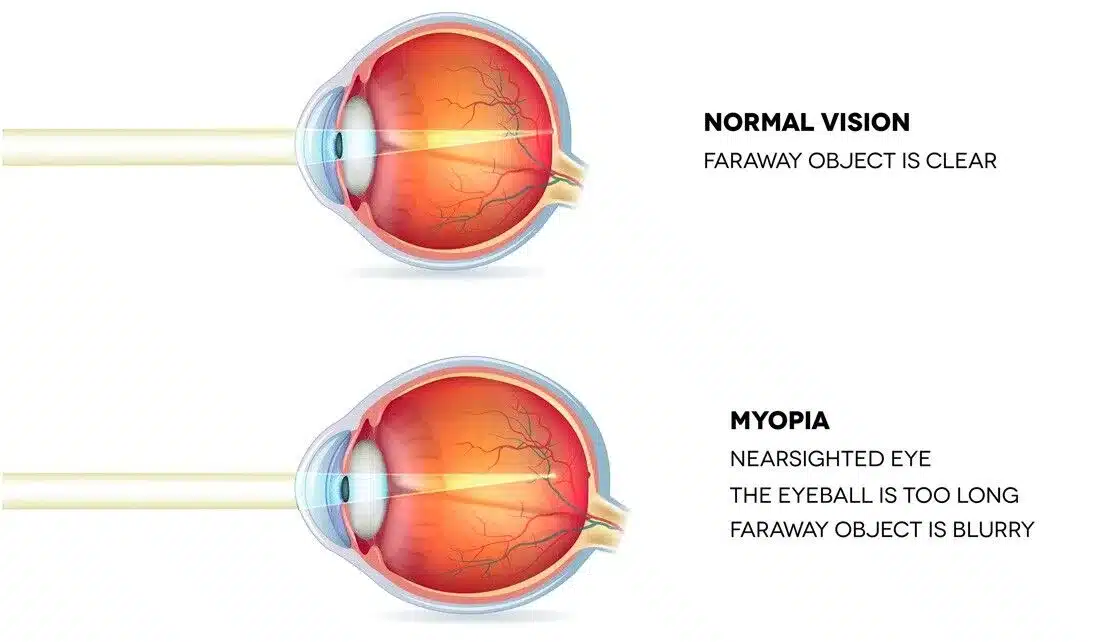
The number of children developing myopia (short-sightedness) is increasing at an alarming rate, with younger children being diagnosed at a growing pace. Despite this, a global survey has found that one in four parents do not understand the term “myopia” or the potential long-term impact it can have on their child’s eye health and quality of life.
According to Jacquie Gattegno, Orthokeratologist and Principal Optometrist at Eyes InDesign Smart Vision Optometry Bondi, many parents misinterpret myopia as nothing more than blurry distance vision, when in reality, it is a progressive condition that can lead to serious vision complications later in life.
“Parents often assume that a simple pair of glasses is all their child needs, but myopia is much more than just a minor inconvenience. Without proper management, it can significantly increase the risk of severe eye diseases,” says Gattegno.
The Real Threat of Myopia – More Than Just Blurry Vision
Many parents believe that myopia simply means difficulty seeing distant objects and that it can be corrected with single-vision glasses. While glasses help improve clarity, they do not stop myopia from progressing—and progression is the real danger.
According to Gary Rodney, Master of Optometry, Smart Vision Behavioural Optometrist, Fellow of the International Academy of Orthokeratology and Myopia Control (FIAOMC), and Founder of Smart Vision Optometry, myopia occurs when the eyeball elongates, causing light to focus incorrectly on the retina. This stretching of the eye increases the risk of irreversible vision problems.
“Many people don’t realise that myopia physically alters the shape of the eye. As the eye continues to elongate, the delicate structures inside become stretched and weakened, making them more susceptible to serious diseases like glaucoma, macular degeneration, and retinal detachment,” Rodney explains.
Why Myopia Control is Essential
Historically, myopia was seen as a minor vision problem, but over the past few decades, its rapid rise has led researchers to recognise it as a global eye health crisis.
- In the 1970s, myopia affected only a small percentage of the population.
- Today, nearly one in three people worldwide are myopic.
- By 2050, projections estimate that 50% of the global population will have myopia.
“The myopia epidemic is escalating. Without intervention, we are looking at a future where half the world’s population could have impaired vision, and a significant number could face blindness due to myopia-related complications,” warns Rodney.
How Myopia Affects a Child’s Daily Life
Beyond the long-term health risks, myopia also affects a child’s learning, social development, and confidence.
1. Difficulties in the Classroom
Children with undiagnosed or worsening myopia often:
- Struggle to see the board clearly.
- Have difficulty copying notes accurately.
- Experience eye strain, fatigue, and headaches.
- Become frustrated with reading and writing tasks.
“Myopia can severely impact a child’s ability to learn. If they can’t see clearly, they may lose interest in school, struggle academically, or even develop behavioural issues,” says Gattegno.
2. Limitations in Sports and Outdoor Activities
Myopic children may:
- Struggle with depth perception, making it harder to judge distances.
- Avoid outdoor play due to discomfort in bright light.
- Feel less confident in ball sports like soccer, tennis, or basketball.
“Poor vision affects a child’s ability to engage in physical activities, which is crucial for both their physical and mental development,” explains Rodney.
3. Emotional and Social Effects
- Low self-esteem due to dependence on glasses.
- Social withdrawal from activities they find visually challenging.
- Frustration or embarrassment when they cannot see as clearly as their peers.
“Children with worsening myopia often feel left out, especially if they struggle to participate in activities that require clear distance vision. This can impact their confidence and overall well-being,” says Gattegno.
Myopia and Sight-Threatening Diseases
While mild myopia may seem manageable, progressive myopia significantly increases the risk of serious eye diseases, including:
1. Cataracts
- Myopia accelerates the development of cataracts, leading to cloudy vision and reduced clarity at a younger age.
2. Glaucoma
- Myopes are twice as likely to develop glaucoma, a condition that damages the optic nerve and can cause permanent blindness if untreated.
3. Macular Degeneration
- High myopia increases the risk of myopic macular degeneration, a leading cause of blindness.
- This condition occurs when the retina becomes thin and damaged, resulting in distorted or lost central vision.
4. Retinal Detachment
- The elongated eye structure in myopes puts extreme stress on the retina, making it more prone to tears and detachment.
- Retinal detachment is a medical emergency that can lead to sudden, irreversible vision loss.
“When myopia progresses to high levels, the risk of severe eye diseases skyrockets. This is why early intervention is crucial,” says Rodney.
How Parents Can Take Action
The good news is that myopia can be managed and its progression can be slowed with modern treatment strategies.
1. Orthokeratology (Ortho-K)
- Special overnight contact lenses that gently reshape the cornea.
- Provides clear vision during the day without glasses or contacts.
- Proven to slow the progression of myopia.
- Learn more about Ortho-K here.
2. Specialised Myopia Control Lenses
- Special soft contact lenses and spectacle lenses designed to reduce eye strain and slow myopia progression.
3. Increased Outdoor Time
- Studies show that spending at least 90 minutes outdoors daily significantly reduces the risk of developing myopia.
4. Behavioural Optometry & Vision Therapy
- A personalised approach that helps train the eyes and brain to work together more effectively.
- Can address focusing issues, eye coordination, and visual processing challenges.
- Learn more about vision therapy here.
Early Myopia Control is Essential
“Myopia is not just an inconvenience—it is a progressive condition with serious long-term risks. The sooner parents take action, the better the chances of protecting their child’s vision for life,” says Gattegno.
Rodney agrees, adding, “With the right myopia management strategies, we can slow or even halt its progression. Parents need to be proactive in ensuring their child’s eyes are regularly assessed beyond just a simple vision test.”
Take the First Step Toward Protecting Your Child’s Vision If your child is showing signs of myopia or if you want to explore myopia management options, book an appointment with Smart Vision Optometry today