|

It’s Pollen Season! How Does It Affect Your Eyes?

pollen season affect eyes

Well, it’s that time of year and if you are anything like our dear Brian here at Thompson Larter Smart Vision Optometry, then you are probably sniffling your way through life with leaking eyes right now!

How Your Eye Health Is Affected

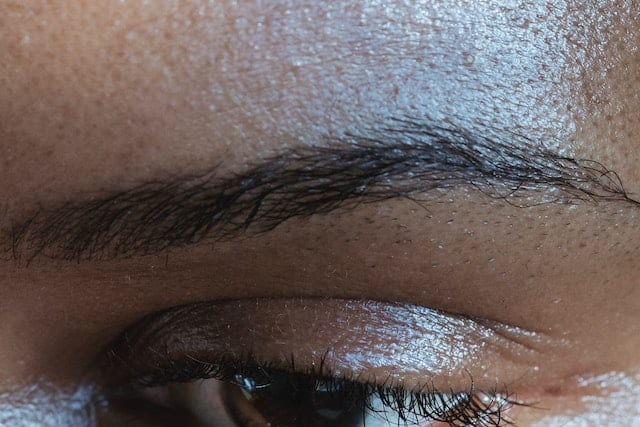
The good ole’ Oxford dictionary tells us that hay fever is an allergy caused by pollen and dust causing the mucous membranes of the eyes and nose to become inflamed, leading to a runny nose and watery eyes. Your eyes and eyelids can become red, itchy and puffy. This is terribly inconvenient at the best of times, let alone when you are a contact lens wearer!

So what should you do? The first option is to wear your glasses instead, though this can be hard as you are constantly taking them on and off to rub at your eyes. If your eyes are sensitive to light and you don’t have prescription sunglasses, then this makes things all the more challenging.

If you really want to stick with your contacts, the best type is your daily contact lenses as these won’t have a build up of protein on them like your fortnightly or monthly lens prescriptions. Your sunnies can go on right over the top and act as a protective barrier when you are outside. However, there is still the risk of pollen and dust getting into your eyes and under the contacts. Furthermore, each rub of the eyes could shift the lenses and disrupt your clarity of vision.

A better option for you just might be Ortho-K. Ortho-K lenses are only worn at night while you are asleep to reshape your cornea and leave with you perfect vision throughout the day. This means nothing in your eyes in the daytime to trap potential irritants and make that hay fever even more frustrating. You can wear sunnies if you need to and there is no need to two sets of glasses everywhere you go.

Pop into a Smart Vision store today to discuss whether Ortho- K could help you kick hayfever in the butt!

Similar Posts

  • | |

    ADHD: My Eyes Won’t Let Me Pay Attention 

    Three behaviours generally associated with a diagnosis of Attention Deficit Hyperactivity Disorder (ADHD). However, did you know that these same three behaviours are very commonly the results of a vision problem? Impulsivity. Hyperactivity. Distractibility. Research tells us children with a vision problem like convergence insufficiency (CI) are a whopping three times more likely to be diagnosed with…

  • |

    More than just Carrots: The Role of Nutrition in Preventing Myopia

    Nutrition And Nearsightedness Many people will remember their grandmothers telling them to eat carrots for better eyesight, but these ladies were only partly correct. As with so many health-related questions, the answer to the question of what foods can help in the fight against myopia is: “It’s complicated.” Australian behavioural optometrist Jacqueline Gattegno explains the…

  • |

    Yes, Shortsighted People Can Play Sport

    With 32 percent of the world’s population living with myopia, it’s not surprising that there are short-sighted people in all walks of life. But it may surprise some folks to know just how many of them are top athletes. After all, the image of a glasses-wearing sportsperson is something that isn’t exactly mainstream. However, there’s…

  • | | | | |

    Seeing Clearly to Perform Sports At Your Best  

    Short-Sighted Athletes Can Succeed   With 32% of the world’s population affected by myopia, it’s no surprise that short-sighted individuals can be found in every field, including sports. Yet, the stereotype persists that clear vision is a prerequisite for athletic success, leaving many myopic individuals hesitant to pursue sports. “Being short-sighted doesn’t mean giving up on…

  • |

    Statistics Tell Horror Story About Vision Problems

    Statistics gathered by surveys, studies and research into visual impairment paint a dismal picture of a world where one out of three people are not seeing clearly, according to Gary Rodney, Australian Behavioural Optometrist, Master of Optometry and Fellow of the International Academy of Orthokeratology and Myopia Control (FIAOMC). And he says the worst of…