Published: 2 November 2018 | Updated: 30 September 2026 | Author: Smart Vision Optometry
Editorial and clinical update — 30 September 2026: The original article/interview below is preserved, including its attributed quotations and editorial structure. Current evidence and guidance below should be relied on where older wording differs.
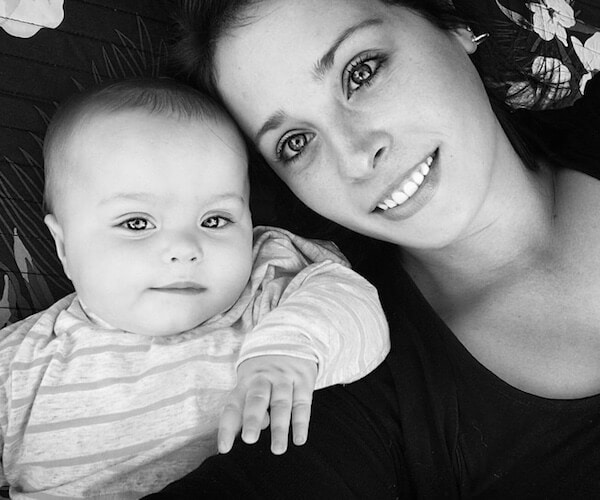
With our newest Smart Vision team member now being 11 months old, we thought it was time to update you on her vision skills. Just like Riley has needed to learn to crawl, walk and talk, she has also had to learn to see.
Riley’s Eye Health Story
Like all babies, Riley was born with fuzzy vision, seeing just far enough to make out the face of the person holding her. Around one month old, she started using her two eyes to track moving objects and around two months she started loving colours and high contrast patterns. At four months, Riley started to perceive depth and at five months she was recognising things and people without seeing all of them yet – hide and seek became her new favourite game (and still is). By eight months, Riley was recognising us easily from across a room and her vision is now close to that of an adult.
Given that sight is our most important and guiding sense, it should absolutely be monitored closely from birth. Visual impairments can lead to significant developmental delays and so a child’s eyes should be checked at birth and at each doctor appointment until their first eye test at 6 months of age.
Riley the rebellious had her first eye test at ten months, when she spent a day in the office observing all of her mother’s patients – preparing for her career as a vision therapist, no doubt. With patience, creativity and some great technology (a singing hippo on our big screen), our principal behavioural optometrist Gary Rodney was able to confirm that Riley’s eyes were focussing where they should be and working as a binocular team. Our tiny legend passed her first eye test with flying colours.
As she grows, Riley’s family – along with the entire Smart Vision team – will be watching to make sure that she meets all of her visual developmental milestones. The Australasian College of Behavioural Optometrists provides a comprehensive checklist for these milestones.
Every child should undergo optometric assessments before they begin their schooling, and it is important to remember that the screening tests conducted at schools do not offer a full and comprehensive picture of the child’s visual development and function.
Book an appointment for a thorough eye check-up or Call the Bondi clinic on (02) 9365 5047 or the Mosman clinic on (02) 9969 1600. Vision is learnt and because it is learnt, it is trainable, which is where behavioural optometrists and vision therapists come in. Who knows? Riley might end up being your child’s vision therapist – she is very advanced! 🙂
Current evidence and clinical context
The AAP overview of childhood vision screening describes age-appropriate checks from infancy and follow-up of abnormal screening findings. This is a US overview, not a universal Australian first-appointment schedule.
In NSW, StEPS provides screening for four-year-olds. Do not wait for preschool screening if there is an earlier concern. The individual milestones and examination in the story do not establish that every visual problem is trainable.
Related Smart Vision reading
Planning a child’s eye examination · Early visual concerns
Frequently asked questions
Is this baby’s timeline a standard for every child?
No. The article describes one child’s history.
Should a parent wait until preschool screening if worried?
No. Raise concerns with a child-health or eye-care professional when they arise.
Does visual development mean every eye problem can be trained away?
No. Management depends on the condition found.