Published: 12 July 2026 | Updated: 28 September 2026 | Author: Smart Vision Optometry
Editorial and clinical update — 28 September 2026: The original article/interview body below is retained in its editorial form, including its attributed quotations and narrative structure. Current evidence and clinical guidance are presented separately below and should be relied on where older wording or claims differ.
Smart Vision Optometry is encouraging Sydney families to think more broadly about children’s vision, particularly as myopia, commonly known as short-sightedness, continues to attract growing concern among parents, educators, and eye care professionals.
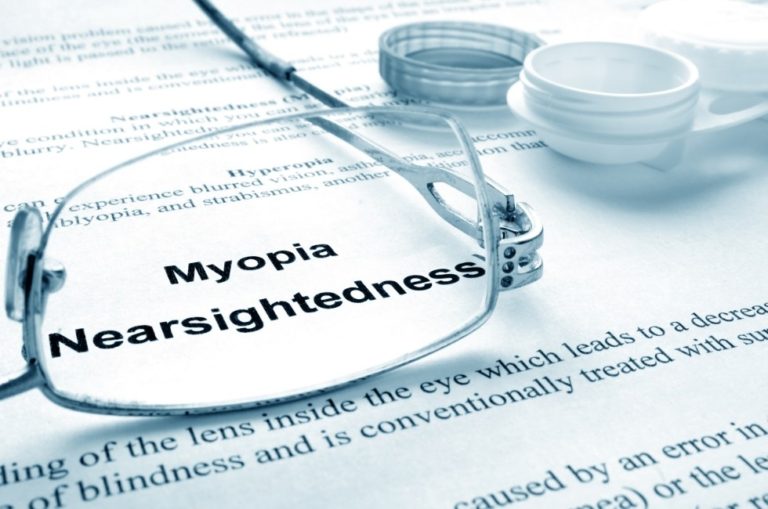
Myopia occurs when distance vision becomes blurred while near vision may remain relatively clear. It often begins in childhood and can progress through the school and university years. A major global review published in the British Journal of Ophthalmology reported that childhood and adolescent myopia increased between 1990 and 2023, with projections suggesting prevalence may approach 50 percent of the population by 2050.
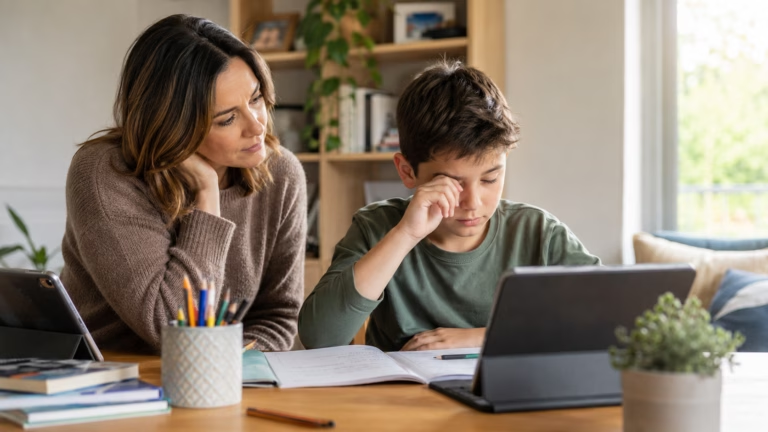
For many parents, the first signs can be subtle. A child may squint at the board, sit closer to the television, move closer to digital screens, complain of headaches, avoid distance-based sport or say they cannot see clearly across the classroom.
Gary Rodney, creator and founder of Smart Vision Optometry, has a Master of Optometry, is a Behavioural Optometrist, Fellow of the International Academy of Orthokeratology and Myopia Control, and has more than 30 years of clinical experience.
“Children do not always know how to explain a vision problem, because they assume everyone sees the world the same way they do,” Rodney said. “That is why regular, age-appropriate eye examinations are so important. A child may be bright, motivated and trying hard, but still be working with a visual system that is making school more difficult than it needs to be.”
Smart Vision Optometry provides bespoke eye care wellness treatment programs specifically to reduce the progression of myopia for children, teenagers and adults through its Bondi Beach and Mosman practices. Its services include children’s vision assessments, behavioural optometry, myopia control, Orthokeratology, also known as Ortho-K, vision therapy and advanced eye health testing.
Jacquie Gattegno, principal senior optometrist at Eyes InDesign Smart Vision Optometry Bondi, is an experienced Behavioural Optometrist and Orthokeratologist.
“When we assess a child with myopia, we are not only asking what prescription helps them see more clearly today,” Gattegno said. “We are also looking at the broader picture, including their age, rate of change, visual habits, family history, lifestyle and the options that may be appropriate for managing progression.”
The Australian Institute of Health and Welfare has identified children’s eye health as an important public health issue, noting that eye problems can affect development, education and quality of life.
Rodney said parents should avoid treating myopia as a minor inconvenience.
“Glasses are important when a child needs them, but myopia management is a more considered conversation,” Rodney said. “The goal is to understand the child properly, monitor change and discuss clinically appropriate options rather than simply reacting every time the prescription increases.”
One option some families ask about is Ortho-K. This involves custom-designed contact lenses worn overnight to gently reshape the front surface of the eye so that the patient may be able to see clearly during the day without daytime glasses or contact lenses. Ortho-K is not suitable for every child, and careful assessment, fitting, hygiene and follow-up are essential.
“Smart Vision Optometry’s version of Ortho-K is never treated as a one-size-fits-all solution,” Gattegno said. “It requires careful measurement, the highest level of customisation available today, proper hygiene, parent involvement and ongoing review. For the right child and family, it is often a very helpful option and many believed the gold standard for myopia control, but suitability always has to be assessed individually.”
Parents are also encouraged to pay attention to behavioural signs that may point to a vision issue. Some children may avoid reading, lose their place, cover one eye, become tired quickly, complain of sore eyes or appear distracted during near tasks.
Smart Vision Optometry’s broader children’s vision approach looks not only at clarity of sight, but also at how the eyes and brain work together in real-life tasks. This includes eye teaming, focusing, tracking and visual comfort during schoolwork.
“A child can often pass a basic distance chart test and still have visual function issues that affect reading, concentration or comfort,” Rodney said. “That is why Smart Vision’s Behavioural Optometry looks beyond whether the child can identify letters on a chart. We are interested in how the visual system performs in everyday life.”
Gattegno said parents should seek advice if they notice changes in behaviour, confidence or performance.
“Sometimes the parent says, ‘My child is smart, but something is not quite right,’” Gattegno said. “Vision is not always the answer, but it should be properly considered. When we understand the visual system, we can either provide care or help direct the family toward the next appropriate step.”
Smart Vision Optometry encourages parents to book an assessment if their child is squinting, moving closer to screens, complaining of headaches, avoiding reading, showing signs of tired eyes, experiencing regular prescription changes or simply has a family history of myopia.
If you would like to learn more about how Ortho-K might benefit your child, or explore our approach to myopia management and custom lens fitting, we are here to help. Book an appointment, or call the Bondi clinic on (02) 9365 5047 or the Mosman clinic on (02) 9969 1600. We are always happy to discuss whether Ortho-K might be a good fit for your family.
Current evidence and clinical context
The National Eye Institute’s myopia guide explains that myopia is a refractive error diagnosed through an eye examination.
For contact-lens based options, CDC guidance stresses keeping lenses away from water and following the prescribed care routine.
Related Smart Vision reading
Children’s eye care · Myopia control and management · Orthokeratology
Frequently asked questions
Does clear vision mean myopia has stopped progressing?
No. Correction can make vision clear while the underlying myopia may still change.
Does Ortho-K permanently cure myopia?
No. Its corneal effect is temporary and requires ongoing wear and follow-up.
Does high myopia carry additional eye-health risks?
Yes. Higher myopia is associated with greater long-term risk of some retinal and other eye conditions.