
Published: 15 June 2026 | Updated: 27 September 2026 | Author: Smart Vision Optometry
Dry Eye Disease is emerging as one of the most common yet under-recognised eye conditions affecting Australians, with optometrists reporting increasing cases across both adult and younger patient groups. As screen use rises and environmental stressors intensify, practitioners say many patients are seeking longer-lasting solutions beyond artificial tears.
Once considered a minor irritation, Dry Eye Disease is now recognised as a chronic inflammatory condition of the ocular surface. Symptoms may include burning, stinging, fluctuating vision, redness, light sensitivity and the persistent sensation of grit in the eyes.
Gary Rodney, creator and founder of Smart Vision Optometry, a Master of Optometry, Behavioural Optometrist and Fellow of the International Academy of Orthokeratology and Myopia Control (FIAOMC) with more than 30 years of experience, says the condition can significantly affect quality of life.
“Dry Eye Disease is not simply about insufficient tears,” Rodney said. “In many cases, it involves dysfunction of the meibomian glands, which are responsible for producing the oily layer of the tear film. When that oil layer is compromised, tears evaporate too quickly.”
Understanding the Root Cause
The tear film contains lipids, water, mucins and other components. If any component becomes unstable, symptoms can develop. One of the most common contributors is Meibomian Gland Dysfunction (MGD), where glands along the eyelid margin become blocked or inflamed.
Without adequate oil secretion, tears evaporate rapidly, leaving the ocular surface exposed and irritated.
Jacquie Gattegno, principal senior optometrist at Eyes InDesign Smart Vision Optometry Bondi and an experienced Behavioural Optometrist and Orthokeratologist, says many patients are surprised to learn their dry eye symptoms are inflammatory in nature.
“Patients often rely on lubricating drops for years without understanding why the problem persists,” Gattegno said. “Drops can provide temporary relief, but if gland function isn’t restored, the underlying issue remains.”
Why Dry Eye Is Increasing
Practitioners are observing several contributing factors behind rising Dry Eye Disease diagnoses:
- Increased screen time and reduced blink rate
- Air conditioning and indoor environments
- Hormonal changes
- Contact lens wear
- Age-related gland changes
Rodney explained that prolonged digital device use reduces blink frequency, which impacts oil distribution across the tear film.
“When we concentrate on screens, blink rate can drop by up to 50 per cent,” he said. “Incomplete blinking prevents proper gland expression, leading to stagnation and inflammation.”
Factual context: Gary’s quoted percentage is retained as part of the interview, but should not be taken as a fixed effect for every screen task or person. Blink patterns vary with the task and the individual.
IPL Is A Modern Treatment Approach
As understanding of Dry Eye Disease has evolved, treatment options have expanded beyond warm compresses and lubricants. One of the more advanced technologies now used in optometric care is Intense Pulsed Light (IPL) therapy.
IPL, originally developed for dermatological treatments, uses controlled pulses of light applied to the skin around the eyelids. Studies have examined benefits for selected patients with meibomian gland dysfunction; the strength of evidence and individual results vary.
Rodney described IPL as a significant development in dry eye management.
“IPL works by targeting abnormal blood vessels and inflammatory mediators along the eyelid margin,” he said. “By reducing inflammation and liquefying thickened gland secretions, we can help restore more normal tear film function.”
How IPL Treatment Works
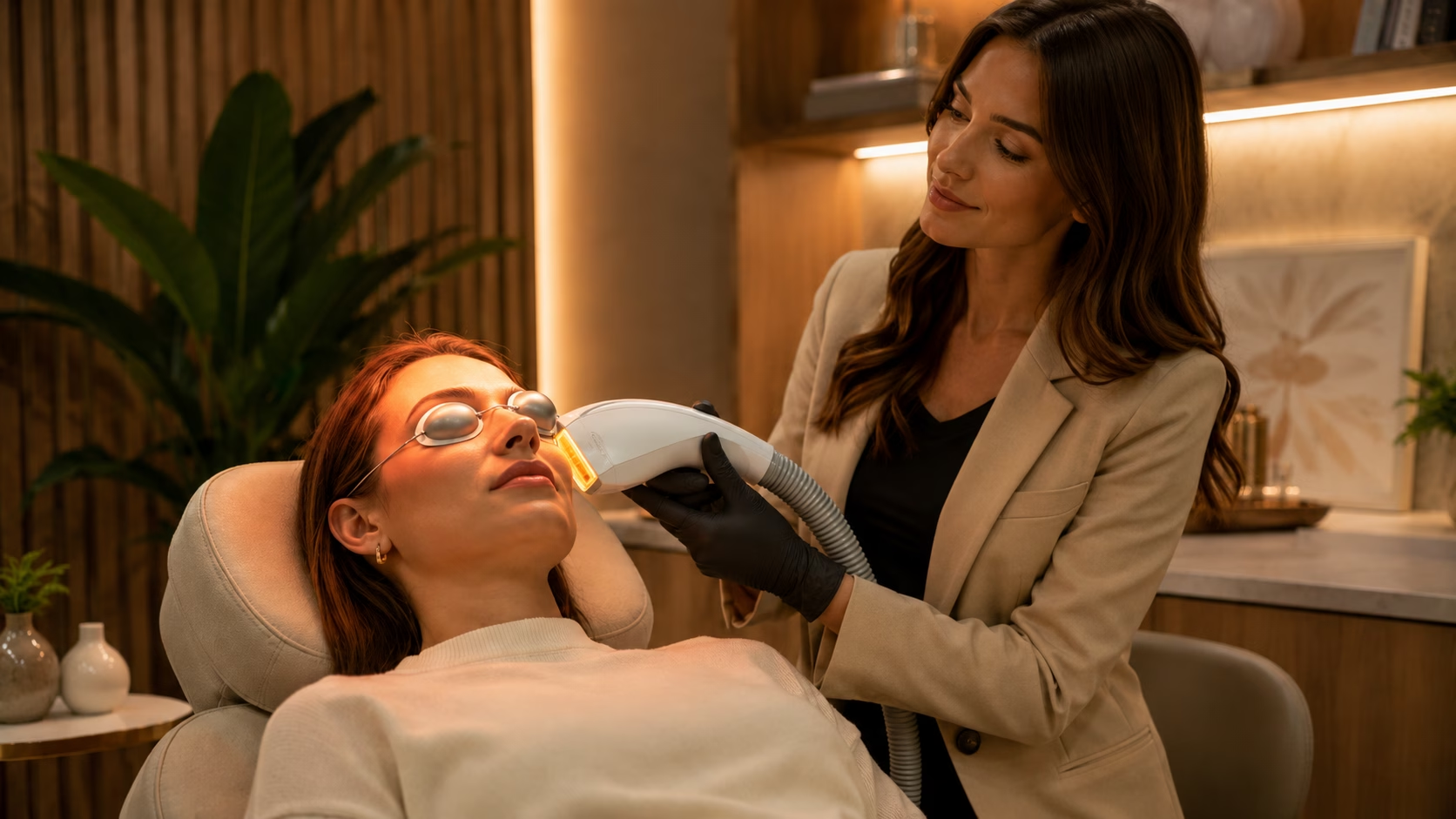
During an IPL session, protective shields are placed over the eyes while light pulses are delivered to the skin beneath the lower eyelids and surrounding area. The clinician should explain the procedure, possible discomfort, risks and the precautions required for the device and patient.
Following light application, manual gland expression may be performed to help release obstructed oils.
Rodney explained that a series of treatments is typically recommended.
“Dry Eye Disease is chronic, so management often involves multiple sessions spaced several weeks apart,” he said. “The goal is to stabilise the ocular surface and maintain long-term improvement.”
Patient Experience and Outcomes
Gattegno says many patients report noticeable improvement in comfort and visual stability following treatment.
“Patients frequently tell us their eyes feel less gritty and less fatigued,” she said. “Some also notice clearer, more consistent vision because the tear film becomes more stable.”
IPL may be considered alongside other care for selected patients with meibomian gland dysfunction. It does not replace assessment or every other treatment.
“It’s about treating the cause rather than simply managing symptoms,” Gattegno added.
Who May Benefit from IPL?
The following symptoms and conditions can prompt an assessment, but do not by themselves establish IPL suitability:
- Chronic dry eye symptoms
- Meibomian Gland Dysfunction
- Ocular rosacea
- Contact lens intolerance
- Persistent irritation despite lubricants
Rodney emphasised the importance of proper diagnosis before commencing treatment.
“A comprehensive dry eye assessment allows us to evaluate gland structure, tear quality and inflammatory signs,” he said. “IPL is recommended only when clinically appropriate.”
A Holistic Management Plan
Practitioners stress that IPL, where appropriate, is often part of a broader management strategy. Nutritional support, blink training, environmental modifications and targeted lid hygiene may also be recommended.
Gattegno said patient education plays a vital role.
“We work closely with patients to identify contributing lifestyle factors,” she said. “Small changes — such as conscious blinking during screen use — can enhance treatment outcomes.”
Moving Beyond Temporary Relief
As awareness grows, more Australians are seeking long-term solutions for persistent dry eye symptoms.
Rodney believes advanced technology has changed expectations.
“Patients no longer need to accept chronic discomfort as normal,” he said. “With modern diagnostic tools and therapies like IPL, we can offer more comprehensive management.”
Gattegno encouraged patients to seek assessment when symptoms affect daily activities.
“If dryness is affecting daily comfort, reading stamina or screen use, it’s worth having a thorough assessment,” she said.
With increasing digital demands and environmental stressors, optometrists say Dry Eye Disease is likely to remain a significant focus in primary eye care.
If you’re experiencing persistent dryness, irritation or fluctuating vision, we can assess whether IPL therapy or a personalised dry eye management plan may help.Book an appointment, or call the Bondi clinic on (02) 9365 5047 or the Mosman clinic on (02) 9969 1600.
Editorial update: evidence and individual suitability
Gary’s and Jacquie’s interview comments are preserved above. Their descriptions of treatment mechanisms and patient experiences do not guarantee improvement for an individual. IPL requires device-specific precautions, appropriate eye protection and assessment of suitability.
A systematic review published in Acta Ophthalmologica in 2025 assessed 13 studies. It found that IPL probably reduced dry eye symptoms meaningfully compared with placebo. However, the clinical importance of adding IPL to standard care remained uncertain, and evidence about adverse events was very uncertain. These distinctions matter because IPL is commonly offered alongside other care.
Read the systematic review of IPL effectiveness and safety. The findings support a discussion of possible benefits and limitations, rather than a promise of a cure or a guaranteed result.
Related interviews cover dry-eye symptoms and treatment, blepharitis and irritated or watery eyes. Seek prompt assessment for a painful red eye or a change in vision.
Frequently asked questions
Is IPL suitable for every person with dry eye?
No. Suitability depends on examination findings, contributing factors and individual circumstances. An assessment should establish whether IPL is appropriate and explain alternatives.
Does IPL guarantee lasting relief?
No. Responses vary, and the evidence has limitations. Discuss expected benefits, risks and how progress will be assessed before deciding on treatment.
Should I stop my eye drops before starting IPL?
Do not change prescribed treatment without advice from your clinician. IPL is often considered within a wider management plan.
Plan your next step
For persistent symptoms, explore our dry eye assessment and management service. Contact our Bondi Beach practice or Mosman practice to discuss appointment availability. The assessment guides suitable management or referral.