
Published: 6 September 2021 | Updated: 28 September 2026 | Author: Smart Vision Optometry
Editorial and clinical update — 28 September 2026: The original article/interview below is preserved from the pre-project WordPress revision, including its attributed quotations and editorial structure. Myopia-control claims should distinguish correction from progression control. Ortho-K temporarily changes corneal shape and requires ongoing wear, hygiene and follow-up; it does not permanently cure myopia. Current evidence and guidance below should be relied on where older wording differs.
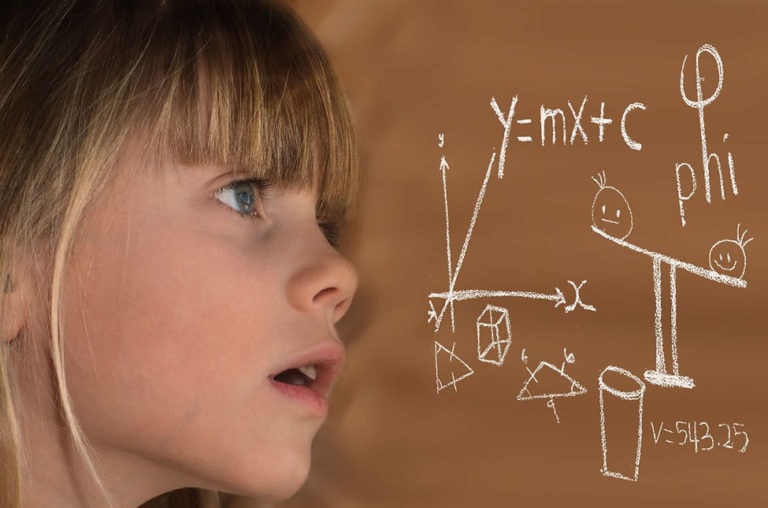
Most stereotypes are based on prejudice, but occasionally, one pops up that’s based on fact – even if only remotely. “Smart kids wear glasses” could be among them, at least up to a point. Australian behavioural optometrist Jacqueline Gattegno sheds light on what is known regarding the intriguing link between myopia and IQ.
Studies Show that a Higher Percentage of Myopic Children do Well at School
The results of a 1958 study are tantalising. US-based researchers reported that children with myopia are inclined to have a higher IQ. Czech, Danish, and Israeli researchers were among those to corroborate the finding. This may seem like an open-and-shut conclusion, but nothing is ever as simple as it seems.
Related research showed that myopic children, regardless of IQ, tended to do better at school. With this piece of information to digest, it might seem that studying harder, better results, and myopia are all linked.
Long hours of study can certainly cause eye strain, this can lead to elongation of the eyeball which is myopia. Additionally, there’s a clear link between too much time spent indoors and myopia, indicating that the absence of natural light is also a problem for studious children.
However, researchers were alert to the question of whether higher IQs and myopia were related, and their investigations continued. Subsequent studies published in 2004 and 2006 by Professor Seang-Mei Saw and colleagues concluded that children with myopia really did tend to have higher IQs regardless of how much time they spent reading and studying.
Why Myopia and IQ are Linked
Given that research had shown the link between Myopia and higher IQ regardless of time spent hitting the books, the next question to address would be why children with myopia tended to have higher IQs. Unfortunately, the answer to that remains a matter for scientific speculation.
Professor Saw and her team of Singaporean researchers observed that there might be a link between the genes determining a predisposition to myopia and a higher IQ with the same sets of genes influencing both traits at once. They added the thought that genes affecting eye size and growth, which are linked to myopia, may also influence neocortical size, a factor which may be associated with IQ.
Many Kids with Myopia Can Live Without Glasses
“There seems to be a grain of scientific truth behind the myth that smart kids wear glasses,” says Jacqueline, “but advances in myopia control may change that. Already, children who are developing myopia are going without glasses or contact lenses. They are seeing perfectly thanks to orthokeratology, a non-surgical treatment that uses night-time wear of hard contact lenses.”“They reshape the cornea, not only eliminating the need for day-to-day correction for myopia, but also its progression. This type of treatment is already widely used. It is to be hoped that in time, there will be further advances in this field, and that children all over the world will have access to myopia control treatments. As a result, children with a predisposition towards myopia may not have to live with short-sightedness and may not need corrective eyewear at all. That will certainly be a happy ending.”
Smart Vision Optometry clinics are located in Sydney. Book a Smart Vision Comprehensive Vision Skills Assessment or Advanced Eye Health Test for any child or adult by calling the Bondi clinic (02) 9365 5047 or the Mosman clinic (02) 9969 1600, alternatively book an appointment online.
READ MORE:
Eye Examinations for Kids
Current evidence and clinical context
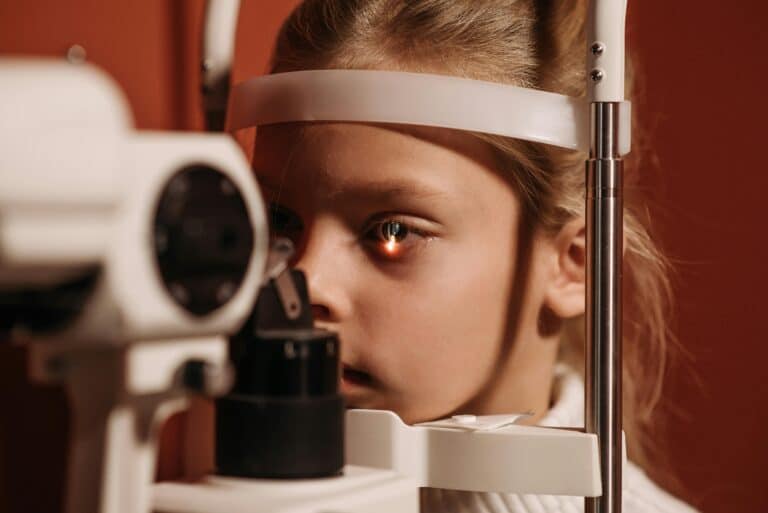
The National Eye Institute’s myopia guide explains that myopia is a refractive error diagnosed with an eye examination.
For contact-lens based options, CDC guidance stresses keeping lenses away from water and following the prescribed care routine.
Related Smart Vision reading
Eyes after 40 and warning signs · Vision, learning and dyslexia · Protecting your vision at work
Frequently asked questions
Does clearer vision mean myopia has stopped progressing?
No. Correction can make vision clear while the underlying myopia may still change.
Is one myopia-control treatment right for everyone?
No. Suitability depends on prescription, age, eye health, progression and practical factors.
Does Ortho-K permanently cure myopia?
No. Its effect is temporary and requires ongoing wear and review.