Published: 6 December 2024 | Updated: 28 September 2026 | Author: Smart Vision Optometry
Editorial and clinical update — 28 September 2026: The original article/interview below has been restored from the verified pre-edit recovery source, preserving its editorial structure and attributed quotations. Current evidence and guidance below should be relied on where older wording differs.
Understanding the Effects of Gaming on Vision and How to Maintain Eye Health in a Digital Age
As technology integrates itself further into daily life, video games have become a prevalent pastime for both young and old. This rising popularity brings concerns about the impact of gaming on vision, a concern echoed by many parents and optical professionals. Understanding how increased screen time affects our eyes and whether video games can offer any benefits is crucial. Gary Rodney, founder of Smart Vision Optometry in Sydney, and Jacquie Gattegno, principal senior optometrist at Eyes InDesign Smart Vision Optometry Bondi, provide insights into these matters, drawing on their extensive experience in the field of optometry.
The Allure of Video Games
Video games began as a simple form of entertainment, intended to showcase technological advancements, educate, and serve as a platform for research development. Today, the industry has ballooned into a global behemoth worth $70.8 billion. A study by the PEW Research Centre[1] found that approximately 50% of adult males and 48% of adult females have engaged with video games across various devices. These statistics underscore the enduring presence of gaming in modern society.
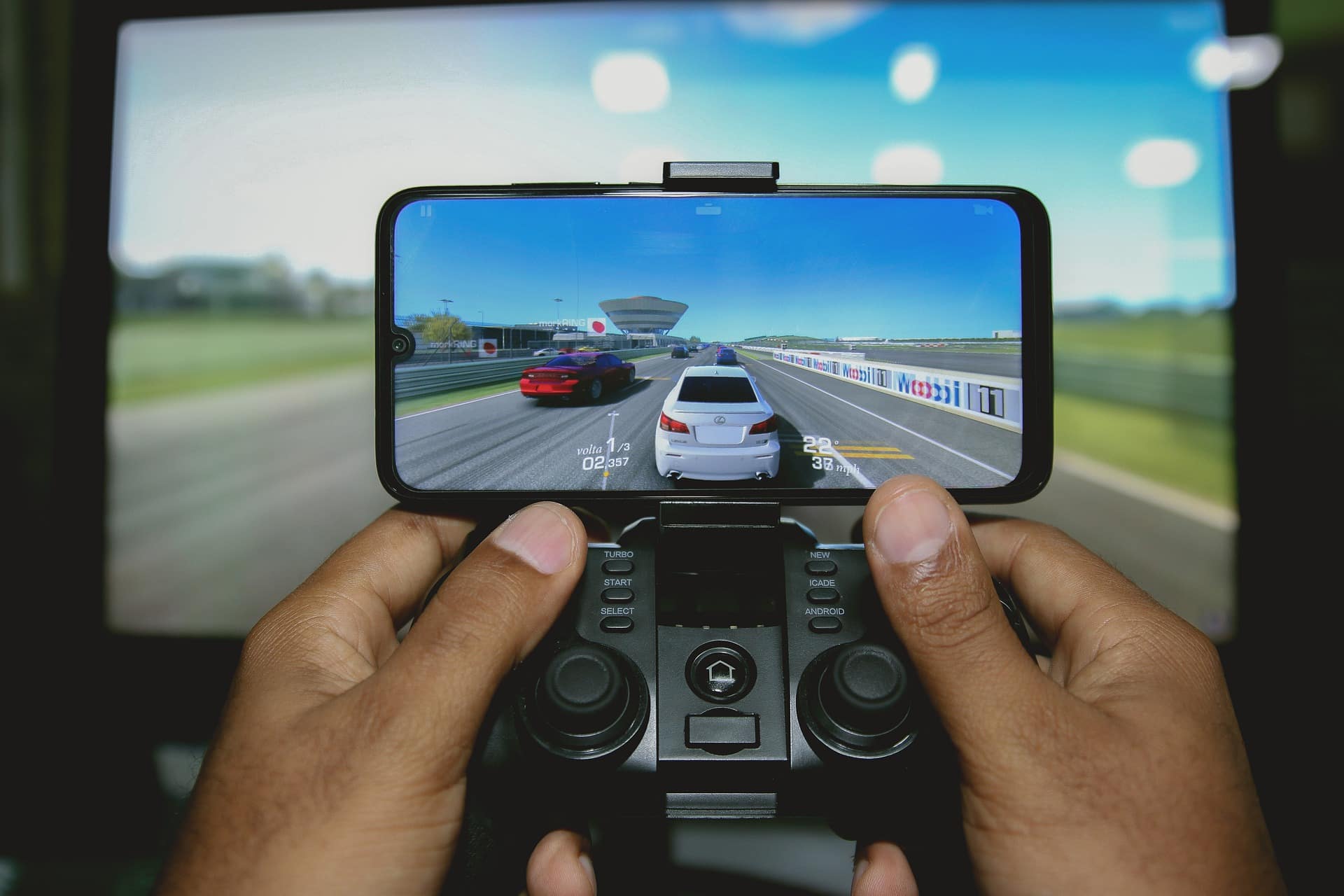
Rodney acknowledges the ubiquity of gaming, noting, “Video games are here to stay. Their integration into everyday devices, particularly smartphones, makes them an unavoidable part of daily life.” Indeed, smartphones, which double as personal assistants, cameras, fitness trackers, and gaming devices, have become indispensable. This accessibility means that children are introduced to digital screens at increasingly younger ages, often before they even begin to speak.
Gattegno adds, “With the convenience and multifaceted use of smartphones, it’s no surprise that screen time has become a significant part of daily routines for both adults and children.”
The Detriments of Gaming
The relationship between video games and eye health is nuanced. On one hand, extensive screen time can be detrimental. A systematic review and meta-analysis on ‘The Association between Near Work Activities and Myopia in Children’[2] indicates a correlation between prolonged near-work activities and an increased risk of nearsightedness in children. Rodney explains, “Spending long periods on devices like smartphones or tablets can elevate the risk of developing myopia.”
Another common issue is Computer Vision Syndrome (CVS)[3], also known as Digital Eye Strain. CVS results from excessive screen use and manifests as sore eyes, headaches, dry eyes, blurred vision, and neck and shoulder pain. This condition arises from poor lighting, screen glare, inappropriate viewing distances, poor posture, and uncorrected vision problems. Efforts to combat CVS include the development of specialised lenses and coatings designed to alleviate these symptoms.
Gattegno stresses, “Parents and individuals need to be aware of the signs of Digital Eye Strain and take proactive steps to mitigate its effects. Simple adjustments like improving lighting conditions and taking regular breaks can make a significant difference.”
The Benefits of Gaming
Despite the potential risks, video games can also offer benefits. Rodney points to research exploring the use of video games in improving vision skills and rehabilitating various vision problems.[4] “Video games can serve as a form of training, increasing patient motivation and compliance by embedding repetitive yet crucial therapy tasks within engaging gameplay,” he says. Action-oriented video games, in particular, have been linked to improved contrast sensitivity, a crucial aspect of vision that typically declines with age. This improvement is not due to enhanced eye health, but rather the brain’s ability to process visual information better.
Additionally, a study by the University of California[5] found that playing action video games can enhance spatial skills. Rodney adds, “These games can train the brain to process spatial information more effectively, a benefit not observed in non-action games.”
Gattegno highlights, “It’s fascinating how certain types of video games can enhance cognitive functions and visual skills, providing a dual benefit of entertainment and skill development.”
A Balanced Approach
It is evident that video games have become an integral part of entertainment for many. While excessive gaming can have negative effects, these can be mitigated through proper precautions and healthy habits. “Moderation is key,” Rodney advises. “Understanding and managing the risks associated with video games can help maintain good eye health.”
Gattegno agrees, “It’s important to strike a balance. Encouraging regular breaks, ensuring proper lighting, and fostering outdoor activities can significantly reduce the potential harm from excessive screen time.”
As research into the potential benefits of video games continues, their role in vision care will expand. Rodney states that Smart Vision Optometry already leverages this kind of technology. “We are proud to offer Vivid Vision, an innovative virtual reality vision training system designed to improve visual function and treat various vision conditions,” he says. This is a perfect example of how this technology is not only a source of entertainment but also a tool for enhancing vision skills and overall eye health.
Maintaining Eye Health in a Digital Age
For parents and individuals concerned about the impact of gaming on vision, Smart Vision Optometry offers comprehensive eye care services. Gattegno emphasises, “Our goal is to educate and provide solutions that help maintain optimal eye health while embracing the benefits of modern technology.”
To learn more about maintaining eye health in a digital age or to book an appointment, visit Smart Vision Optometry’s online booking page. Explore their eye health resources for additional information.
By staying informed and adopting a balanced approach, it’s possible to enjoy the benefits of video games while safeguarding eye health. Contact Smart Vision Optometry today to ensure your vision remains in top condition amidst the digital revolution. Rodney concludes, “Taking proactive steps now can preserve your vision for the future, allowing you to enjoy all the benefits that modern technology offers without compromising eye health.”
Gattegno adds, “With the right guidance and habits, we can all enjoy the digital world safely and healthily. Our team at Smart Vision Optometry is here to support you every step of the way.”
[1] Duggan, M., Gaming and Gamers. 2015, Pew Research Centre
[2] Hsiu-mei Huan, D.S.-T.C., Pei-Chang Wu, The Association between Near Work Activities and Myopia in Children – A Systematic Review and Meta-Analysis. Plos One, 2015.
[3] American Optometric Association, Computer Vision Syndrome. 2016.
[4] Sharwood, J. Action Video Games Improve Vision, 2009.
[5] Kaveri Subrahmanyam, P.M.G., Effect of video games practice on spatial skills in girls and boys. Journal of Applied Developmental Psychology, 1994. 15(1): p. 13-32.
Current evidence and clinical context
The National Eye Institute recommends giving the eyes a rest during prolonged computer use. Its 20-20-20 approach is a useful prompt: about every 20 minutes, look at something around 20 feet away for 20 seconds. A brief pause also provides an opportunity to blink normally and reset posture.
For children, gaming is one part of the broader near-work and outdoor-time picture. The International Myopia Institute clinical management guidance advises regular breaks, appropriate reading distances, changes in near fixation and sufficient time outdoors. It does not say that a single game or device inevitably causes myopia.
Blue-light filtering products are often promoted to screen users, but the evidence does not support broad promises. A Cochrane review concluded that blue-light filtering spectacles probably make no difference to eye strain caused by computer use over the short term. Any lens recommendation should be based on the person’s prescription, symptoms, tasks and examination findings rather than a universal gaming claim.
Related Smart Vision reading
Digital eye strain · Myopia control and management · Digital eye strain in children
Frequently asked questions
Do screens permanently damage the eyes?
Ordinary screen use can cause temporary discomfort, but device blue light has not been shown to cause permanent eye disease.
Are blue-light glasses required for everyone?
No. They are not a universal treatment for digital eye discomfort.
When should symptoms be checked?
When they persist, recur frequently or include significant blur, pain or double vision.