DRY EYE CARE · BONDI BEACH & MOSMAN
Dry Eye Disease
At a Glance
Dry eye can involve too little tear production, tears evaporating too quickly, or both. Smart Vision Optometry in Bondi and Mosman assesses symptoms and eye-surface findings to guide a management plan. Treatment depends on the cause and may need ongoing review.

Symptoms and when to seek help
Dryness, burning, grittiness, redness, watery eyes and fluctuating vision can occur with dry eye. These symptoms can also have other causes, so persistent or worsening discomfort deserves assessment.
Seek urgent medical care for sudden vision changes, flashing lights, painful light sensitivity, an eye injury, or a red eye with severe headache and feeling unwell. A painful red eye, or a red eye while wearing contact lenses, needs prompt assessment. See Healthdirect’s dry-eye guidance.
Watch dry eye disease and smart ipl on its dedicated viewing page.
Understanding the causes
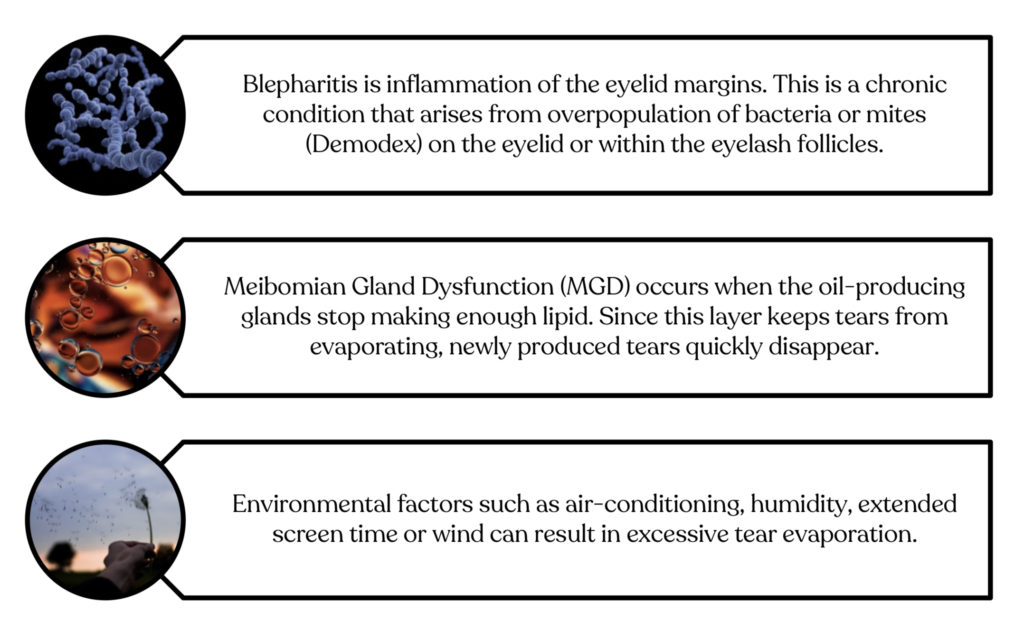
The tear film contains watery, oily and mucus components. Problems with tear production or the oil-producing meibomian glands can affect its stability. Evaporative and aqueous-deficient dry eye can occur together; severity is not determined by the type alone.
Age, some medicines, autoimmune conditions, contact lenses and dry or windy environments can contribute. The National Eye Institute’s dry-eye overview explains common causes and management options.
Watch dry eye disease explained on its dedicated viewing page.
What happens at an assessment?
Bring your current drops, medicines list, glasses and details of when symptoms occur. Your optometrist can examine the eye surface and eyelids and assess tear quantity and stability. Imaging, where appropriate, is interpreted alongside symptoms and other findings.
See our Dry Eye Smart Assessment page or eye examination information to prepare for a discussion with the team.
Bring your drops, medicines list and details of when symptoms occur.
Your optometrist examines the eye surface, eyelids and tear film.
Discuss suitable options and ongoing review with your optometrist.
Management options
Drops and everyday care
Lubricating drops, gels or ointments may help. Lid hygiene and warm compresses may be advised for eyelid or gland problems. Prescription treatment or referral may be appropriate when symptoms persist. Ask which products and techniques suit your eyes.
Reducing exposure to smoke or direct airflow and taking breaks during screen use may help comfort. Our SVO article What Is Screen Time Doing To Your Eyes? offers related screen-comfort advice.
Procedures for selected patients
Punctal plugs can help retain tears in selected cases. Gland-directed procedures may be discussed when meibomian gland dysfunction contributes to symptoms. Ask about suitability, alternatives, risks, expected costs and review before choosing a procedure.
LipiFlow thermal pulsation
LipiFlow uses heat and pressure to treat meibomian gland dysfunction. A Cochrane review summary published in 2025 found broadly similar results to other dry-eye treatments, with low or very low certainty evidence. It does not support a promise of superior or lasting relief for everyone.
Intense pulsed light (IPL)
IPL may be considered for selected people with meibomian gland dysfunction. A 2025 systematic review found probable symptom benefit compared with placebo, but the added benefit alongside standard care and evidence about adverse effects remained uncertain. Assessment and a discussion of risks are necessary.
Confirm current equipment and procedure availability with the practice. The supporting videos and images provide background; they do not establish your suitability or predict your result.
Frequently asked questions
What are common symptoms of dry eye disease?
Dry eye symptoms may include dryness, burning, grittiness, redness, soreness, watery eyes, irritation or fluctuating vision.
Why do my eyes water if I have dry eye?
Watery eyes can occur when the eye surface becomes irritated and produces reflex tearing.
What happens in a dry eye assessment?
SVO assesses the likely causes of dry eye symptoms and uses the findings to guide a personalised treatment plan. SVO performs a comprehensive digital dry eye analysis which images the live glands in the eyelids to help show the current level of gland loss.
Imaging can support an assessment, but it does not establish every cause of symptoms or replace the examination. Ask which tests are appropriate and available at your appointment.
Plan your next step
For persistent symptoms, contact our team to discuss an appropriate appointment and fees. Bring questions about what the assessment shows, which options are suitable and when your progress should be reviewed.
Contact Us
For routine enquiries, call Bondi (02) 9365 5047 or Mosman (02) 9969 1600.
Your eyes. Your personalised programme.
Start with a detailed assessment. Discuss a bespoke wellness treatment programme based on your individual findings and needs.