Published: 2 January 2026 | Updated: 29 September 2026 | Author: Smart Vision Optometry
Editorial and clinical update — 29 September 2026: The original article/interview body below is retained in its editorial form, including its attributed quotations and narrative structure. Current evidence and clinical guidance are presented separately below and should be relied on where older wording or claims differ.
The Importance of Early Vision Performance
When young children begin reading, writing and engaging in sport and screen activities, the performance of their visual system plays a pivotal role in their overall development. At Smart Vision Optometry (SVO), the focus is on vision‑fitness — ensuring the visual system is not just healthy, but functioning optimally for learning and life.
“We don’t just test eyesight; we train vision skills,” says Gary Rodney, founder and creator of Smart Vision Optometry, Master of Optometry, Behavioural Optometrist and Fellow of the International Academy of Orthokeratology and Myopia Control (FIAOMC).
Jacquie Gattegno, Orthokeratologist and Principal Optometrist at Eyes InDesign Smart Vision Optometry Bondi emphasises: “For children, enabling smooth tracking, focusing flexibility and eye‑team coordination can make a dramatic difference to reading fluency and confidence.”
Background & Research
Research indicates that vision dysfunction can influence not just acuity, but academic performance, reading speed and visual comfort. For example, tracking difficulties can impede reading accuracy, while focusing instability may cause fatigue and slow the pace of learning.
Gary notes: “Rather than waiting for a child to complain of blur, we proactively assess how well their eyes work as a team, how they adapt their focus and how well they engage visually in learning‑tasks.” Jacquie adds: “When children struggle with reading, it may not just be comprehension — sometimes their eyes are ‘working’ harder than we realise.”
The SVO Child‑Centred Vision‑Fitness Programme
Comprehensive Functional Vision Assessment
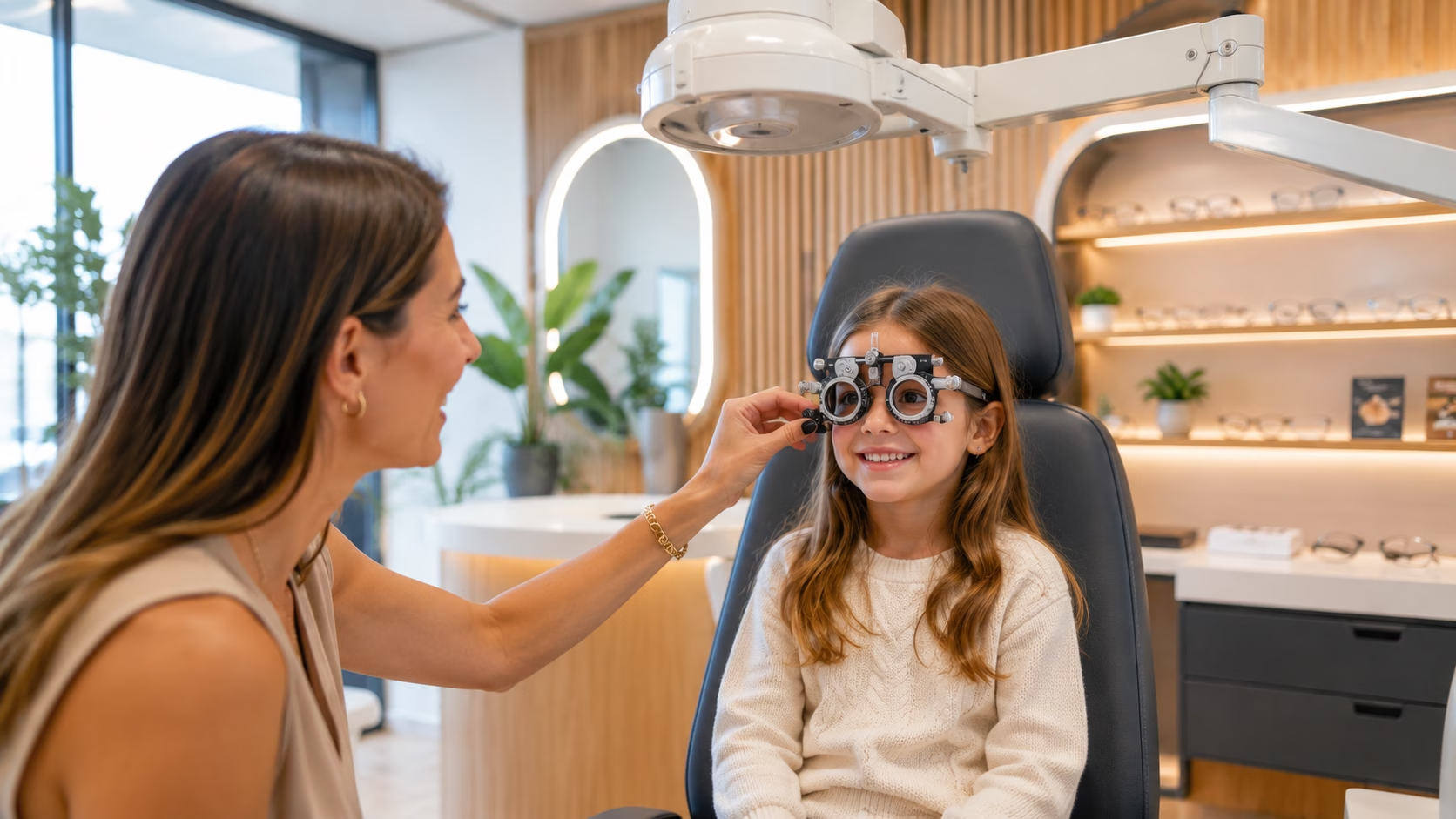
The starting point is a detailed exam designed for children. Gary explains: “We assess how the eyes move, how they focus, how they switch between near and far, how they coordinate one with the other, and how the visual brain interprets what the eyes see.”
Jacquie emphasises: “We also look at lifestyle and demands — screen time, homework habits, sports, reading posture, lighting and visual environment.”
Customised Vision Skills Training Plan
From that assessment, SVO crafts a tailored plan. Gary says: “The plan may include vision therapy sessions, home‑training exercises, lifestyle adjustments (such as increased outdoor time) and monitoring of myopia risk.”
Jacquie adds: “For example a child who struggles with reading tracking might take part in targeted therapy, and when they begin sport we might integrate hand‑eye‑coordination drills into the plan.”
Monitoring, Feedback & Support
Key to success is regular review: Gary: “We track progress, adapt tasks, increase challenge, incorporate feedback and ensure the child is engaged and comfortable throughout.”
Jacquie: “We also coach parents and teachers — vision is part of the learning‑ecosystem, so we provide practical advice on classroom lighting, screen breaks, visual ergonomics and outside‑time habits.”
Benefits & Outcomes in Real Life
Reading & Learning Gains
When visual skills improve, children often report fewer errors when reading, less skipping lines and fewer headaches. Jacquie says: “We’ve seen children who finish homework faster, feel less fatigued, and enjoy reading rather than struggle through it.”
Gary emphasises the long‑term vision wellness: “We’re building robust visual systems that reduce future risk, rather than simply reacting to a problem.”
Myopia‑Control and Visual Risk Reduction
Early intervention also benefits myopia‑risk children.
With early customised plans, children may experience slower myopia progression, meaning lower lifetime risk of eye disease later on.
Enhanced Confidence and Engagement
Jacquie highlights: “When a child knows their vision is under control, they feel more confident in class and beyond. Visual struggles can subtly undermine self‑esteem.”
Gary adds: “Visual wellness becomes part of life — playing sport, reading for pleasure, learning at school — not just fixing a prescription.”
Practical Steps for Parents and Children
- Schedule a Comprehensive Vision Skills Assessment if your child struggles with reading, attention, screen fatigue or sports coordination.
- Ask about the full functional vision assessment at SVO, not just acuity.
- Understand the customised plan — ask how it addresses your child’s lifestyle, not just glasses.
- Support home elements: regular outdoor time, screen‑breaks, good lighting, posture, and follow‑up sessions.
- Monitor progress and maintain communication with the optometrist.
Why Choose a Customised Vision Fitness Pathway?
Gary summarises: “Every child is different, every visual demand is different. By personalising the plan, we optimise outcome, engagement and long‑term wellness.”
Jacquie emphasises: “As Smart Vision Behavioural Optometrists, we’re not just responding to symptoms — we’re building vision systems that support learning, growth and life.”
With SVO, children receive not just an eye‑test, but a child‑centred, performance‑based vision wellness journey.
How To Start A Wellness Journey
If you’re a parent noticing your child squinting at screens, avoiding reading, complaining of headaches or struggling in visual tasks — now’s the time to act.
Book a comprehensive vision skills assessment online with Smart Vision Optometry’s team.
Learn more about SVO’s dedicated children’s vision‑therapy programme here: Vision Therapy & Developmental Optometrists.Start your child’s personalised vision wellness journey today. Book an appointment, or call the Bondi clinic on (02) 9365 5047 or the Mosman clinic on (02) 9969 1600.
Current evidence and clinical context
The CITT-ART trial found that treating convergence insufficiency did not improve reading performance compared with placebo therapy. This limits the reading-performance implications of the original interview.
RANZCO recommends early educational assessment and evidence-based teaching for suspected learning disorders. Care for a coexisting eye condition should accompany, not delay, that support. Ask what finding a proposed exercise addresses and how progress will be measured.
Related Smart Vision reading
Vision, learning and dyslexia · Eye assessments and school demands
Frequently asked questions
Does difficulty reading prove a child needs vision exercises?
No. Reading difficulty alone does not diagnose an eye condition. Educational assessment may be needed alongside an eye examination.
Can treatment for an eye condition guarantee improved reading?
No. In CITT-ART, treatment for convergence insufficiency did not improve reading performance compared with placebo therapy.
What should parents ask before starting a programme?
Ask which diagnosed condition is being treated, what evidence supports the plan, what it costs and how its results will be reviewed.