Published: 22 August 2022 | Updated: 28 September 2026 | Author: Smart Vision Optometry
Editorial and clinical update — 28 September 2026: The original article/interview below has been restored from the verified pre-edit recovery source, preserving its editorial structure and attributed quotations. Current evidence and guidance below should be relied on where older wording differs.
Contact Lens Health Week
Contact lenses are a common alternative to glasses. Although contact lenses have been a great innovation there are certain risks involved.
Jacqueline Gattegno, a SmartVision Behavioural Optometrist at Eyes InDesign Bondi wants to educate people on the risks of contact lenses, how to avoid those risks, and how to practise good contact lens health.
As mentioned, contact lenses are a great innovation and an alternative to glasses. However, there are a few issues that can occur if healthy measures are not practised. If burning or itchiness occurs after a short period of wearing contact lenses, it could mean that there is an allergic reaction to the contact lenses. There can also be a feeling of grittiness, as if there is sand stuck in the eye.
Blurred vision is another common problem. If the cornea has a lack of oxygen it can cause blurred vision or something known as corneal hypoxia. This can happen if contacts are over worn. Dryness in the eye can be due to dry eye syndrome, which can be caused by several factors. “It is normal to experience some sort of discomfort when you first start wearing contacts, however if the discomfort becomes unbearable or there is a discharge that is not normal, you should speak to your Smart Vision Behavioural Optometrist,” says Jacqueline.
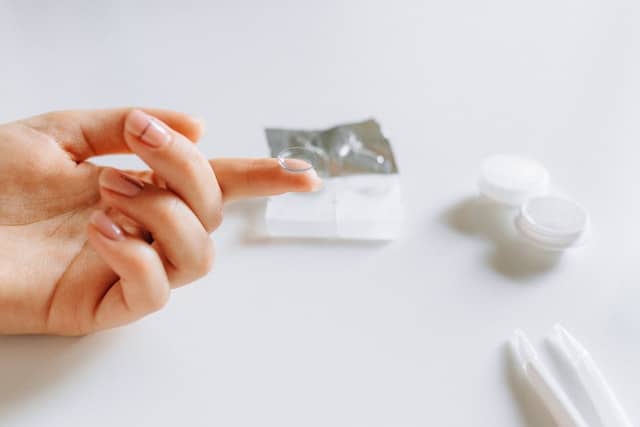
There are ways to try and minimise issues associated with wearing contact lenses. It is important to have good hand hygiene when inserting contact lenses. “Always wash your hands and dry them with a lint free towel or tissue, there should be no traces of perfumes, creams or hairsprays anywhere near your eyes,” suggests Jacqueline. These kinds of practises are crucial in ensuring that the correct contact lens hygiene is taking place. While burning or itchiness can indicate an allergy to the contact lenses, it might be that there is an allergy to the lens solution. Before visiting your optometrist, try and use other brands or solutions. However, if the burning or itchiness continues, make an appointment with a Smart Vision optometrist. If it feels as though there is a grain of sand in the eye, remove the contacts and rinse both sides with solution then flush the eye with cool sterile water to get rid of anything that might be in there. If there is redness or dryness, the best way to combat this is to practise the highest level of contact lens hygiene. If blurred vision happens, it is likely because contacts are being worn for an extended period and this should be avoided.
It is essential to practise the correct contact lens hygiene to avoid any issues. If severe reactions happen during the use of contact lenses such as discharge or constant burning or blurry vision, contact a Smart Vision Behavioural Optometrist and book a Comprehensive Vision Skills assessment. This way, a clear and unique wellness plan can be designed.
Smart Vision Optometry clinics are located in Sydney. Book a Smart Vision Comprehensive Vision Skills Assessment or Advanced Eye Health Test for any child or adult by calling the Bondi clinic (02) 9365 5047 or the Mosman clinic (02) 9969 1600, alternatively book an appointment online.
Current evidence and clinical context
CDC guidance recommends clean, dry hands, keeping lenses away from water, using fresh disinfecting solution and following the prescribed replacement schedule.
Pain, marked redness, light sensitivity or reduced vision while wearing lenses should prompt removal of the lenses and timely eye-care advice.
Related Smart Vision reading
Ortho-K lens care · Dry-eye management · Advanced eye health testing
Frequently asked questions
Can contact lenses be rinsed in tap water?
No. Contact lenses should be kept away from water.
Should old solution be topped up with fresh solution?
No. Use fresh disinfecting solution as directed.
When should a contact-lens wearer seek prompt advice?
Pain, marked redness, light sensitivity or reduced vision needs prompt assessment.