Published: 27 July 2021 | Updated: 28 September 2026 | Author: Smart Vision Optometry
Editorial and clinical update — 28 September 2026: The original article/interview body below is retained in its editorial form, including its attributed quotations and narrative structure. Current evidence and clinical guidance are presented separately below and should be relied on where older wording or claims differ.
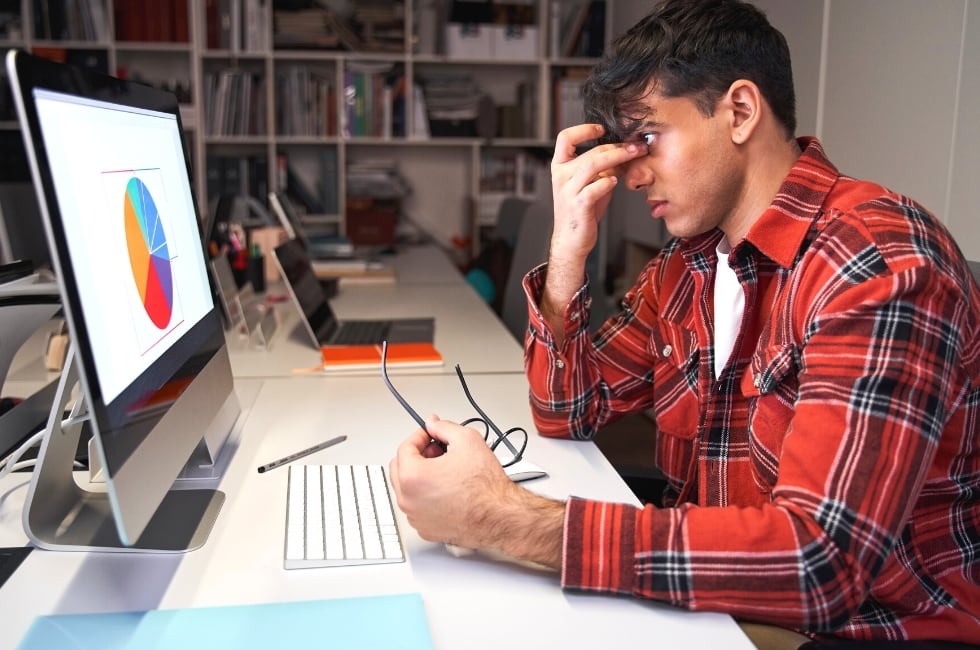
For students, long hours spent in front of the computer go with the territory. Finally, they graduate, and embark on their chosen career – which, for many people, involves even more hours of screen time. At the end of a long day’s work or study, some people experience eye strain. Recurring or worsening symptoms warrant assessment rather than being assumed to be an inevitable part of ageing.
“Eye strain from staring at screens is incredibly common,” says Australian behavioural optometrist Jacqueline Gattegno. “It’s believed that most people these days have some degree of digital eye strain, but it will come as a relief to know that there’s no proven link between eye strain and the progression of myopia.”
“At the same time, there’s also no real proof that computers can’t contribute to longer-term vision problems. The jury is out. However, if you’re already experiencing vision issues and do visually intensive work, eye strain is an inevitable result, and if you have perfect vision and make your eyes work too hard, you’re also at risk of experiencing eye strain.”
Clinical context — 28 September 2026: Jacqueline’s original interview comments are retained. Digital eye strain is a symptom group, not proof of permanent eye damage or myopia progression. Recurring discomfort should be assessed individually; new double vision, severe pain or sudden vision loss need prompt medical advice.
Symptoms of Eye Strain
Most people will identify with the feeling of having “tired eyes.” They may be dry, and they can be sore and uncomfortable. The dryness of strained eyes can cause a burning sensation, and one may experience sensitivity to bright lights, trouble with focusing and refocusing the eyes, headaches, or even double vision.
“It’s easy to say that digital eye strain among students and professionals isn’t serious,” says Jacqueline, “but symptoms this uncomfortable must be taken seriously because they have such a big impact on quality of life and the ability to fulfil one’s overall potential. Nobody is going to be at their best when they’re battling with discomfort.”
How to Prevent and Treat Eye Strain
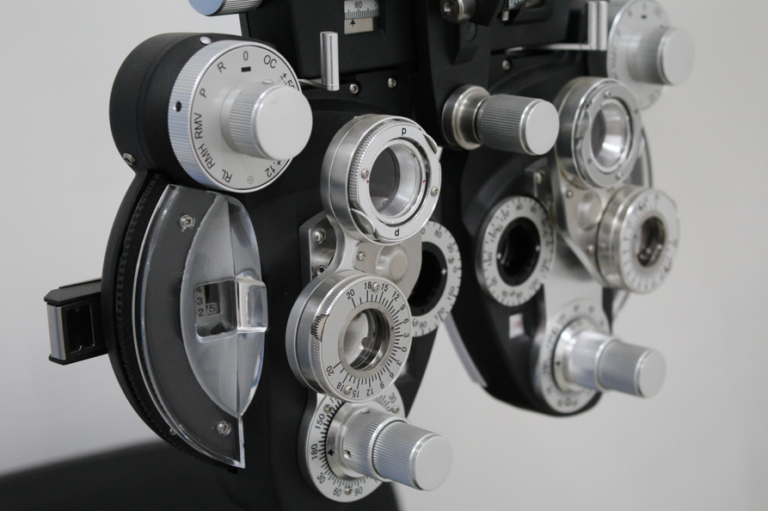
“Your optometrist can help,” says Jacqueline. “Even if your glasses are fine for all the other things you do, they might not be suited for seeing at screen-distance. Computer glasses can also be tinted to reduce the effects of blue light. If your eyes are dry, an optometrist can determine whether it’s just a matter of not blinking enough or whether your tear glands aren’t working quite as they should. If the glands are blocked, there are non-invasive treatments, and if it’s just dryness from not blinking enough, there are drops that can help with dry eyes.”
Evidence update — 28 September 2026: A suitable screen-distance prescription is distinct from a blue-light filter. A 2023 Cochrane review found blue-light-filtering spectacles may offer no short-term eye-strain advantage over otherwise comparable lenses without the filter. Sleep-related results were uncertain. Dry-eye treatments depend on the cause identified during assessment.
“Since the overtired muscles that focus your eyes have a big role to play in eye strain, giving them some stretching exercises can work wonders. Behavioural optometrists are able to teach you eye exercises that will help to relax and strengthen the muscles in your eyes.”
Clinical clarification: Eye exercises are not a universal treatment for screen discomfort. A prescribed programme should address an identified problem, with clear goals and review; it should not replace investigation of prescription, eye-surface or other causes.
Taking frequent breaks requires almost as much discipline as working or studying for hours, but despite sounding counter-productive, it’s quite the opposite. “Give your eyes and your brain a break every twenty minutes or so,” says Jacqueline. “Chances are, you’ll get even more done. Just twenty seconds looking at a distant object every twenty minutes can make a huge difference.”
You should also blink consciously. “When people work in front of screens, their eyes are fixed on the task, and they blink less often than they should. That dries out the eyes and accounts for the burning, gritty sensation that people with eye strain experience.”
According to Jacqueline, a person’s computer, their posture, and the layout of their work area may also contribute to their eye strain.
“Always work with your screen at arms’ length from your face and positioned so that you look slightly downwards at it when seated in an upright posture. Making text larger may help, as can increasing the refresh rate of your screen to reduce flickering. You can also reduce glare by using a matte filter for your screen. Ensure that your workspace is well-lit and that your screen is not brighter than the light in the room. If dry air is contributing to the problem, a humidifier may be of help. Finally, make sure you’re getting enough sleep. It rests the eyes and re-energises the mind.”
HEAR: Ultra106.5FM Interview with Gary Rodney – Covid and Myopia: What you need to know!
For more information on eye strain and how it can be treated and prevented, or to make an appointment for a regular eye check, visit the Smart Vision website: Optometrists Sydney: Optometry Services For Children and Adults | Smart Vision; for specific information about Myopia treatment and prevention visit Myopia Prevention: Solutions, Control And Treatment In Sydney; and for detailed information about Myopia Treatment visit Orthokeratology In Sydney: The Non Surgical Alternative.
Book an appointment for a thorough eye check-up or Call the Bondi clinic on (02) 9365 5047 or the Mosman clinic on (02) 9969 1600.
Further information and related interviews
The American Optometric Association’s computer vision syndrome guidance explains symptoms, workstation factors and breaks. The 20-20-20 rule is a practical reminder to interrupt sustained close work, not a guaranteed cure. Bring your current glasses, viewing distances and symptom notes to an appointment.
Read the related interviews on computer vision syndrome, working from home and dry and watery eyes.
Frequently asked questions
Can I have eye strain even if I can read an eye chart?
Yes. Comfortable reading and screen work involve more than a single distance-vision measurement. Explain the task and symptoms during an assessment.
Should I try generic eye exercises for discomfort?
A programme should follow an appropriate assessment and have a specific purpose. Exercises are not a universal treatment for eye strain.
What should I bring to an eye-strain appointment?
Bring your glasses, contact-lens and eye-drop details, and notes about symptoms, tasks and viewing distances.
Eye assessments in Bondi Beach and Mosman
Explore our digital eye strain service or contact the Bondi Beach practice or Mosman practice to discuss an appointment.
Further reading: Penn Medicine on computer vision syndrome and Cochrane’s blue-light-filtering lens review summary. The original Gary Rodney interview about COVID and myopia remains available as historical discussion, separate from current individual advice.