
Published: 1 May 2026 | Updated: 29 September 2026 | Author: Smart Vision Optometry
Editorial and clinical update — 29 September 2026: The original article/interview body below is retained in its editorial form, including its attributed quotations and narrative structure. Current evidence and clinical guidance are presented separately below and should be relied on where older wording or claims differ.
As Australian students face growing academic demands and increased classroom screen use, optometrists are encouraging parents to prioritise comprehensive eye examinations before visual issues begin affecting learning.
While many families associate eye tests with blurry distance vision, practitioners say classroom performance relies on a far broader range of visual skills — including eye teaming, tracking, focusing stamina and visual processing efficiency.
Gary Rodney, creator and founder of Smart Vision Optometry, a Master of Optometry, Behavioural Optometrist and Fellow of the International Academy of Orthokeratology and Myopia Control (FIAOMC) with more than 30 years of experience, said the link between vision and learning is often underestimated.
“Clear eyesight is only one part of the visual system,” Rodney said. “A child can read the 6/6 line yet still struggle with tracking across a page, sustaining focus or coordinating both eyes effectively. Those inefficiencies can impact reading fluency and comprehension.”
Visual Skills and Academic Performance
Educational tasks require prolonged near focus, smooth eye movements across lines of text and the ability to maintain visual attention for extended periods.
Jacquie Gattegno, principal senior optometrist at Eyes InDesign Smart Vision Optometry Bondi and an experienced Behavioural Optometrist and Orthokeratologist, says subtle visual difficulties may present as behavioural or concentration concerns.
“Parents sometimes notice their child avoiding homework, losing their place while reading or complaining of headaches,” Gattegno said. “These signs can indicate visual fatigue rather than a lack of effort.”
Common classroom-related symptoms may include:
- Skipping lines while reading
- Using a finger to track text beyond early primary years
- Reduced reading stamina
- Headaches after school
- Difficulty copying from the board
Gattegno emphasised that early assessment can clarify whether visual factors are contributing.
“When we identify and address underlying inefficiencies, children often experience improved comfort and confidence,” she said.
The Impact of Increased Screen Learning
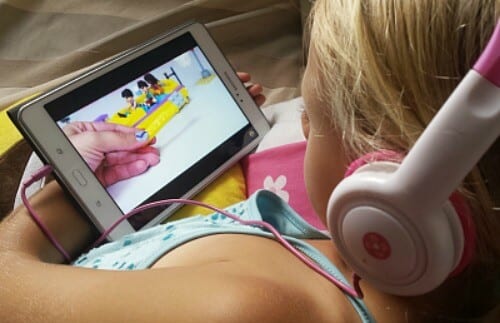
Digital learning platforms have become standard in many Australian schools. While technology enhances accessibility and engagement, it also increases sustained near demand.
Rodney explained that prolonged close work places stress on the focusing system.
“Accommodation and convergence must work continuously during screen tasks,” he said. “If those systems are imbalanced, fatigue develops more quickly.”
In addition to digital eye strain, extended near work may influence myopia progression in susceptible children.
More information on proactive strategies is available at:
https://smartvisionoptometry.com.au/myopia-prevention/
Beyond Standard Vision Screening
School-based vision screenings typically focus on distance clarity. However, behavioural optometry assessments evaluate a broader range of visual skills.
Rodney said comprehensive testing includes binocular coordination, tracking accuracy and focusing flexibility.
“We assess how the eyes function as a team,” he said. “That functional component is critical for sustained academic tasks.”
Gattegno added that children often adapt to inefficiencies without realising that visual tasks should feel easier.
“Many students assume reading is supposed to feel tiring,” she said. “When we improve efficiency, they often report that school feels less exhausting.”
Myopia: A Growing Consideration
In addition to learning-related concerns, optometrists are monitoring the steady rise in childhood myopia.
Earlier onset of short-sightedness has been associated with greater overall progression. Left unmanaged, higher levels of myopia can increase the risk of retinal and ocular health complications later in life.
Rodney emphasised the importance of proactive management.
“Myopia is not simply about stronger glasses each year,” he said. “We now have evidence-based approaches designed to slow axial eye growth and reduce long-term risk.”
One option is Orthokeratology, which involves overnight corneal reshaping lenses designed to provide clear daytime vision while influencing peripheral retinal defocus.
More information is available at:
Orthokeratology at Smart Vision Optometry
Gattegno noted that families often appreciate the dual benefits.
“For school-aged children, Orthokeratology can provide daytime freedom and contribute to myopia management,” she said. “It’s particularly appealing for active children involved in sport.”
When Should Children Have an Eye Examination?
Practitioners recommend that children receive a comprehensive eye examination before starting school, followed by regular reviews throughout their academic years.
Rodney said waiting for visible symptoms may delay necessary intervention.
“Vision changes can occur gradually,” he said. “Routine monitoring allows us to detect early progression and adjust management plans accordingly.”
Gattegno encouraged parents to trust their observations.
“If a child is avoiding reading, squinting at the board or complaining of tired eyes, it’s worth investigating,” she said. “Early support can prevent small issues from becoming larger obstacles.”
Supporting Long-Term Visual Health
As educational expectations continue to evolve, optometrists say collaboration between families and eye care providers is essential.
Rodney believes proactive care offers long-term reassurance.
“Our goal is to support visual development through each stage of childhood,” he said. “Modern diagnostic technology allows us to personalise care and track changes accurately.”
Gattegno added that empowering families with knowledge makes a difference.
“When parents understand how the visual system works, they feel more confident making informed decisions,” she said.
With both learning demands and screen exposure increasing, practitioners say early and regular assessments remain one of the simplest ways to protect children’s visual comfort and performance.
If you’d like to learn more about how Ortho-K might benefit your child — or explore our approach to myopia management and custom lens fitting — we’re here to help.Book an appointment, or call the Bondi clinic on (02) 9365 5047 or the Mosman clinic on (02) 9969 1600. We are always happy to discuss whether Ortho-K might be a good fit for your family.
Current evidence and clinical context
Some eye conditions can make near work uncomfortable. The National Eye Institute explains convergence insufficiency and its assessment and treatment.
The CITT-ART trial did not find improved reading performance from treating convergence insufficiency compared with placebo therapy. RANZCO recommends educational assessment and evidence-based support for suspected learning disorders. The interview’s statements about reading, confidence or classroom performance must be considered in that context; eye care does not replace that support.
Related Smart Vision reading
Vision, learning and dyslexia · Vision therapy and its limitations
Frequently asked questions
Does passing a distance-vision screening explain every classroom concern?
No. An eye examination can investigate coexisting eye conditions, while reading or attention concerns may also require educational or medical assessment.
Can vision therapy be promised to improve reading?
No. The CITT-ART trial did not show better reading performance from treating convergence insufficiency than from placebo therapy.
Should educational support wait until eye treatment is finished?
No. Suspected learning difficulties need timely assessment and appropriate educational support alongside care for any diagnosed eye condition.