Published: 16 April 2026 | Updated: 28 September 2026 | Author: Smart Vision Optometry
Editorial and clinical update — 28 September 2026: The original article/interview body below is retained in its editorial form, including its attributed quotations and narrative structure. Current evidence and clinical guidance are presented separately below and should be relied on where older wording or claims differ.
Australian optometrists are reporting a steady rise in childhood myopia, with specialists warning that early detection and proactive management are now more important than ever.
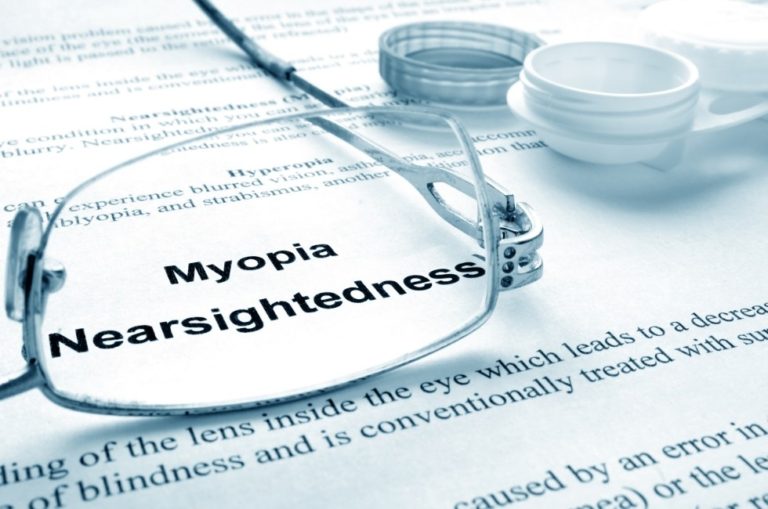
Myopia (short-sightedness), once considered a simple refractive inconvenience, is increasingly recognised as a progressive eye condition with potential long-term health implications. International projections suggest that by 2050, nearly half the global population may be significantly myopic. Australian urban communities are already reflecting similar trends.
According to Gary Rodney, creator and founder of Smart Vision Optometry, a Master of Optometry, Behavioural Optometrist and Fellow of the International Academy of Orthokeratology and Myopia Control (FIAOMC) with more than 30 years of clinical experience, the issue extends well beyond blurry distance vision.
“Myopia involves structural elongation of the eye,” Rodney said. “The longer the eye becomes, the higher the lifetime risk of retinal detachment, glaucoma and myopic macular degeneration. The earlier it starts in childhood, the greater the overall progression.”
Lifestyle Changes Under Scrutiny
Health professionals are pointing to significant lifestyle shifts over the past decade. Increased screen exposure, prolonged near work and reduced outdoor activity are all under investigation as contributing factors.
Children now spend hours each day on digital devices for both education and recreation. While technology has delivered educational benefits, optometrists are observing the unintended consequences.
Jacquie Gattegno, principal senior optometrist at Eyes InDesign Smart Vision Optometry Bondi and an experienced Behavioural Optometrist and Orthokeratologist, says families are often unaware that progression can be slowed.
“Many parents assume stronger glasses each year are inevitable,” Gattegno said. “What they don’t realise is that we now have evidence-based strategies designed specifically to slow the progression of myopia, not just correct it.”
Research has also highlighted the protective role of outdoor exposure. Studies suggest that natural light stimulates dopamine release in the retina, helping regulate healthy eye growth. Children who spend at least two hours outdoors daily show lower rates of myopia onset.
“We can’t change genetics,” Rodney said, “but we can influence environmental factors. Encouraging outdoor activity and managing sustained near work are simple but powerful steps.”
Orthokeratology Gains Attention
One treatment receiving growing attention is Orthokeratology, commonly known as Ortho-K. The therapy involves custom-designed rigid contact lenses worn overnight to gently reshape the cornea. Upon waking, the lenses are removed, allowing clear vision throughout the day without glasses.
According to Rodney, the science behind Ortho-K is well established.
“Orthokeratology changes peripheral retinal defocus patterns,” he explained. “By altering how light focuses across the retina, we reduce the stimulus for further eye elongation. Studies show axial growth can be slowed by 40 to 60 per cent in many cases.”
Parents exploring this option can learn more at:
Orthokeratology at Smart Vision Optometry
Gattegno noted that the lifestyle benefits are equally compelling.
“Children involved in sport or swimming often love the freedom,” she said. “There’s no concern about glasses slipping or contact lenses drying out. From a Smart Vision behavioural optometry perspective, confidence and comfort are important components of overall visual development.”
Spectacle and Contact Lens Innovations
Beyond Ortho-K, specialised myopia control spectacle lenses and soft contact lenses are also available. These designs incorporate advanced optics to influence peripheral focus and support slower progression.
Further information is available at:
https://smartvisionoptometry.com.au/myopia-prevention/
Rodney emphasised that individual assessment remains critical.
“Every child’s eye structure is unique,” he said. “We use corneal topography, axial length measurements and detailed visual assessments to tailor a management plan.”
Early Detection Remains Key
Specialists warn that children may not always recognise or articulate visual difficulties. Signs such as squinting, sitting close to screens or books, headaches and declining academic performance may indicate underlying issues.
Gattegno explained that behavioural optometry evaluates more than clarity.
“We assess how the eyes team together, track across a page and sustain focus,” she said. “Visual efficiency directly influences reading stamina and classroom engagement.”
Routine eye examinations allow practitioners to monitor growth changes and intervene before significant progression occurs.
“If we can reduce the final prescription by even one dioptre,” Rodney said, “we meaningfully lower long-term ocular risk. Myopia control is preventative eye health.”
A Shift Toward Proactive Eye Care
The approach to childhood myopia has evolved from reactive prescription updates to strategic progression management. With research continuing to expand, optometrists are urging families not to delay assessment.
Gattegno believes awareness is growing.
“Parents are asking better questions,” she said. “They want to understand long-term eye health, not just short-term clarity.”
Rodney agrees that education is central.
“The earlier we intervene, the more impact we can have,” he said. “Modern optometry gives us tools that simply weren’t available twenty years ago.”
If you’d like to learn more about how Ortho-K might benefit your child — or explore our approach to myopia management and custom lens fitting — we’re here to help.Book an appointment, or call the Bondi clinic on (02) 9365 5047 or the Mosman clinic on (02) 9969 1600. We are always happy to discuss whether Ortho-K might be a good fit for your family.
Current evidence and clinical context
The National Eye Institute’s myopia guide explains that myopia is a refractive error diagnosed through an eye examination.
For contact-lens based options, CDC guidance stresses keeping lenses away from water and following the prescribed care routine.
Related Smart Vision reading
Children’s eye care · Myopia control and management · Orthokeratology
Frequently asked questions
Does clear vision mean myopia has stopped progressing?
No. Correction can make vision clear while the underlying myopia may still change.
Does Ortho-K permanently cure myopia?
No. Its corneal effect is temporary and requires ongoing wear and follow-up.
Does high myopia carry additional eye-health risks?
Yes. Higher myopia is associated with greater long-term risk of some retinal and other eye conditions.