
Published: 30 November 2024 | Updated: 28 September 2026 | Author: Smart Vision Optometry
Editorial and clinical update — 28 September 2026: This article retains its original news/interview structure and attributed quotations for editorial integrity. Ortho-K uses prescribed overnight contact lenses to temporarily reshape the cornea. Suitability and results vary; it does not permanently cure myopia, and safe handling, water avoidance and regular follow-up are essential. Current sourced guidance is provided below and should be relied on where older wording differs.
Published: · Last updated: · Publisher: Smart Vision Optometry
At a glance: Ortho-K uses prescribed overnight lenses to temporarily reshape the cornea. Suitability is individual, results vary, and safe lens care and regular review are essential. It does not cure myopia.
What Orthokeratology Does
Orthokeratology, or Ortho-K, uses specially fitted rigid gas-permeable contact lenses, usually worn during sleep, to temporarily change the shape of the front surface of the cornea. The aim is to provide clearer unaided vision during the day. The effect is temporary and requires the lens-wearing schedule prescribed by the optometrist.
Ortho-K is mainly used for myopia (short-sightedness); whether a lens design can also address astigmatism depends on the individual assessment and prescription. The US Centers for Disease Control and Prevention describes Ortho-K as a special-purpose lens that temporarily reshapes the cornea.
For children with progressing myopia, Ortho-K may be considered as one part of an individual myopia-management plan. It does not cure myopia, and suitability, response and ongoing monitoring vary from person to person.
The Ortho-K Assessment and Fitting Process
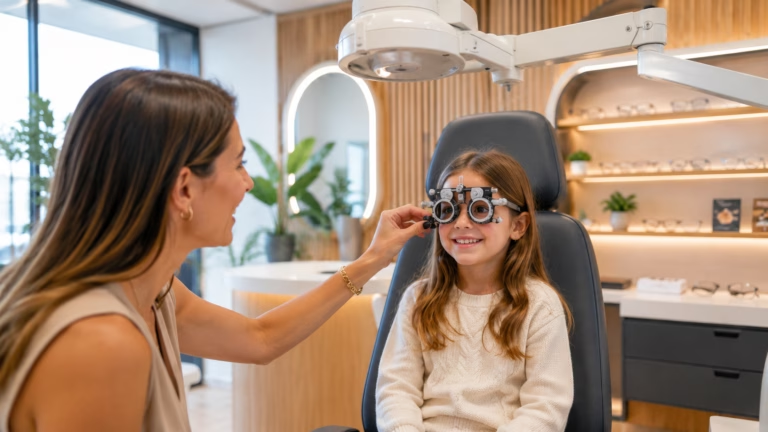
The process begins with an eye examination by a Smart Vision optometrist trained in Orthokeratology. If Ortho-K may be suitable, the optometrist measures the cornea, including corneal topography, and uses those findings with the prescription and eye-health assessment to select a customised lens design.
Fitting time, the number of lens changes and the amount of daytime vision correction vary. Rigid lenses can be noticeable at first, and comfort is individual. Follow-up visits are needed to assess vision, the lens fit and the health of the cornea.
The corneal-shaping effect is temporary. Lenses generally need to be worn on the schedule prescribed by the optometrist to maintain the effect; if wear stops, the cornea and vision gradually move back towards their previous state.
Why Some People Consider Ortho-K
Some people consider Ortho-K because they would prefer not to wear glasses or daytime contact lenses during sport, work or other activities. Contact lenses should not be exposed to water, including while swimming or surfing, because water exposure can increase the risk of infection.
Daytime freedom from corrective lenses can be useful, but results differ and some people may still need glasses at times. Ortho-K also requires consistent overnight lens care and regular professional review.
Glasses, daytime contact lenses and other clinical options have different benefits and risks. The appropriate choice depends on the prescription, eye health, age, activities and ability to follow the required hygiene and review schedule.
Ortho-K and Myopia Management
For some children with progressing myopia, Ortho-K may be considered as one evidence-based management option intended to slow progression. It is not suitable for every child and does not guarantee that progression will stop. The International Myopia Institute clinical management guidance recommends an individual assessment, discussion of risks and benefits, and ongoing monitoring.
A myopia-management plan may also consider other optical or pharmacological options, time outdoors and the child’s visual needs. The plan and review interval should be set by the treating eye-care professional.
Who May Be Assessed for Ortho-K?
An Ortho-K assessment may be relevant for people who:
- Have myopia and want to discuss an alternative to daytime glasses or contact lenses.
- Take part in activities where daytime corrective lenses may be inconvenient.
- Can follow the prescribed overnight wear, cleaning, hygiene and follow-up schedule.
Suitability is not determined by lifestyle or age alone. The early myopia assessment information from Orthokeratology Sydney explains why assessment comes before a lens decision. The optometrist also considers the prescription, corneal shape, tear film, eye health and ability to handle lenses safely. Although the shaping effect is reversible, Ortho-K is still contact-lens wear and has infection and other complication risks.
Safety, Hygiene and Follow-Up
Sleeping in contact lenses increases the risk of contact-lens-related eye infection. Ortho-K should only be worn under professional supervision, with the prescribed lenses, replacement schedule and follow-up visits.
Wash and dry hands before handling lenses, use the recommended fresh disinfecting solution, keep lenses and the case away from water, and never top up old solution. The CDC contact-lens care guidance explains these hygiene steps.
Remove the lenses and seek prompt eye-care advice for pain, unusual redness, light sensitivity, discharge or sudden blurred vision. These can be warning signs of a contact-lens complication; the CDC lists symptoms that require attention.
Discuss Ortho-K with Smart Vision Optometry
For more information about Orthokeratology and Smart Vision’s approach to myopia management, visit the Smart Vision Ortho-K service page. You can also read the related information on Myopia Prevention Sydney and Orthokeratology Sydney.
Book an online appointment to discuss whether an Ortho-K assessment is appropriate, or call the Bondi clinic on (02) 9365 5047 or the Mosman clinic on (02) 9969 1600. An assessment is needed to determine individual suitability.
Frequently asked questions
Is the effect of Ortho-K permanent?
No. The corneal-shaping effect is temporary. Maintaining it requires the wearing schedule prescribed by the optometrist.
Is Ortho-K suitable for every child with myopia?
No. Suitability depends on the prescription, corneal shape, eye health and ability to follow lens-care and review requirements.
Can Ortho-K lenses come into contact with water?
Keep the lenses and lens case away from water and follow the prescribed cleaning routine. Water exposure can increase contact-lens infection risk.
Current evidence and clinical context
Ortho-K is mainly used for myopia (short-sightedness); whether a lens design can also address astigmatism depends on the individual assessment and prescription. The US Centers for Disease Control and Prevention describes Ortho-K as a special-purpose lens that temporarily reshapes the cornea.
For some children with progressing myopia, Ortho-K may be considered as one evidence-based management option intended to slow progression. It is not suitable for every child and does not guarantee that progression will stop. The International Myopia Institute clinical management guidance recommends an individual assessment, discussion of risks and benefits, and ongoing monitoring.
Wash and dry hands before handling lenses, use the recommended fresh disinfecting solution, keep lenses and the case away from water, and never top up old solution. The CDC contact-lens care guidance explains these hygiene steps.
Remove the lenses and seek prompt eye-care advice for pain, unusual redness, light sensitivity, discharge or sudden blurred vision. These can be warning signs of a contact-lens complication; the CDC lists symptoms that require attention.
Related reading
Orthokeratology, or Ortho-K,; eye examination; correction and progression guide.
Frequently asked questions
Is the effect of Ortho-K permanent?
No. The corneal-shaping effect is temporary. Maintaining it requires the wearing schedule prescribed by the optometrist.
Is Ortho-K suitable for every child with myopia?
No. Suitability depends on the prescription, corneal shape, eye health and ability to follow lens-care and review requirements.
Can Ortho-K lenses come into contact with water?
Keep the lenses and lens case away from water and follow the prescribed cleaning routine. Water exposure can increase contact-lens infection risk.