Published: 29 October 2020 | Updated: 30 September 2026 | Author: Smart Vision Optometry
Editorial and clinical update — 30 September 2026: The original article/interview below is preserved, including its attributed quotations and editorial structure. Current evidence and guidance below should be relied on where older wording differs.
Myopia Epidemic Getting Worse | Gary Rodney
While eye experts are still not sure exactly what is behind the myopia epidemic that’s upping the amount of people living with shortsightedness to extreme levels, some progress is being made in establishing what factors are the most likely to be at the root of it, according to Australian behavioural optometrist and fellow of the International Academy of Orthokeratology and Myopia Control (FIAOMC), Gary Rodney. And two of them, the impact of constricted urban lifestyles, and the apparent transfer of myopia between myopic parents and their children through genes or by the hand-on of family lifestyles, are increasingly being seen both as possible causes of the epidemic, and as being the hardest to deal with when trying to manage the epidemic and hopefully stop it before myopia affects everyone on the planet.
Why It’s Important to Contain the Surge of Myopia
Rodney says that the effects of the refractive error stretch far further than how it influences vision by causing myopics to see everything close by clearly but anything further away as a blur. It affects and worsens other eye dysfunctions, and impairments like cataracts, non-age-related macular degeneration, glaucoma and retinal detachment, and it can also impact on the emotional, functional, learning and social aspects of the lives of those who have it, as well as their self-image, and ability to feel that they fit into a world they can’t see properly.
Passed-on Lifestyle Habits Could be at Core of a Spiking Myopiademic
According to Rodney, studies that show children born to myopic parents are more likely to also be myopic, (three times more likely if only one parent is myopic, and six times more if both are) have long attributed this to a variety of genes. However, Rodney says researchers and eye doctors are currently shifting their focus towards the possibility that the parent-child increase in myopic risk might have less (or nothing) to do with genes after all.
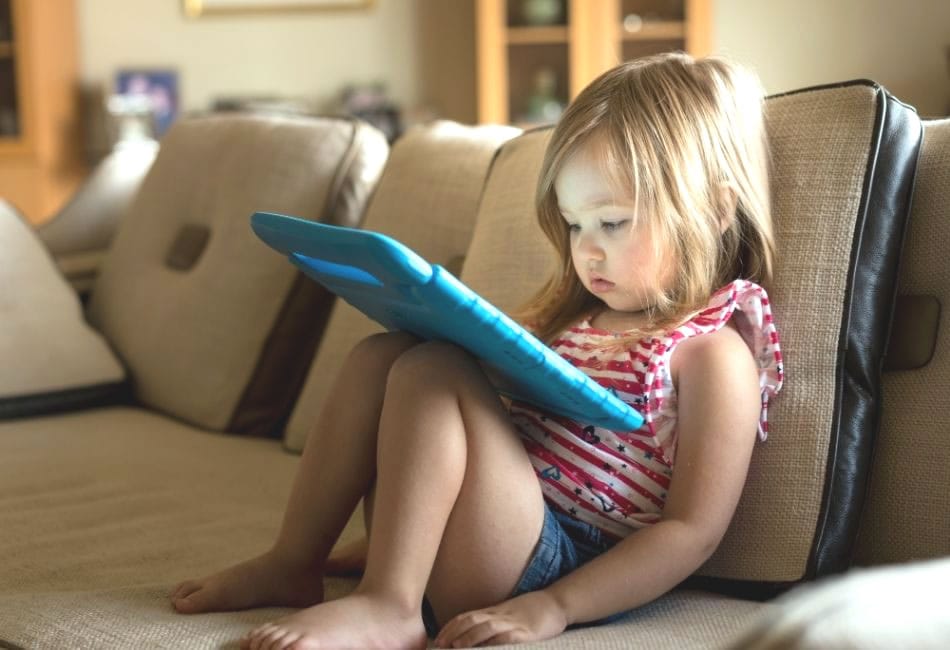
The catalyst may instead be entrenched in the passing down, generation after generation, of the family lifestyle to young children who, in learning about their new world, tend to copy their parents’ lifestyle patterns as if these are the blueprint of life. And, Rodney says, if the family has lived in or around a city for generations, the “blueprint” passed on in terms of family history will be that of the second biggest threat in terms of prolonging the epidemic, the urban lifestyle. This way of life involves confined indoor-living in which too little time is spent exercising, or outdoors under natural light; and too much is spent in front of screens in small areas lit by artificial light, all of which have been identified as increasing the onset, and speeding up the progression of myopia.
How Myopia Could Take Over the World’s Vision
Myopia has been increasing its prevalence at a fast rate since the 1970s when under a million people were myopic. Currently it’s believed to be affecting nearly 3billion people, or one third of the world population, and projections suggest it could rise to impacting on one out of two (or around 5 billion) people by 2050.
“ The current myopia epidemic has been running up the graph fairly closely in sync with a similar but slightly faster surge in urbanisation, which is projected to reach a point by 2050 where two out of three of the global population will be living urban lifestyles,” Rodney says.
What concerns him is that this could lead to an even more blurry future in the decades that follow 2050, perhaps even leading to a world in which almost everyone could be subject to low myopia, at the very least. And where a far bigger share of those myopics than the 10% (up from 2,2 % 50 years ago) projected for the more severe levels of high or pathological myopia in 2050, may become a very harsh reality.
These statistics and projections may seem trivial with regard to the prevalence of myopia down the line, Rodney says, when the intrinsic risks to children of being born to myopic parents are taken into account. This suggests that everybody could be at risk of being affected by myopia because in a world half populated by myopics, at least one parent (and probably both) of every child born in the second half of the century, would be likely to be myopic. And this could start an endless vicious circle which could propel myopia still further and faster towards taking over the whole world’s vision.
To learn more about the myopia epidemic, its treatment and management, and more importantly what you can do to prevent it, or to make an appointment, visit the Smart Vision website: Optometrists Sydney: Optometry Services For Children and Adults | Smart Vision; for specific information about Myopia treatment and prevention visit Myopia Prevention: Solutions, Control And Treatment In Sydney; and for detailed information about Myopia Treatment visit Orthokeratology In Sydney: The Non Surgical Alternative.
Myopia Prevention, Control & Management
Book Now to Take Control of Myopia
Current evidence and clinical context
Holden and colleagues’ 2016 analysis projected 49.8% global myopia prevalence in 2050, with uncertainty. It did not forecast universal myopia.
The historical headline and extrapolation beyond 2050 are not established predictions. The interview’s claim of fewer than one million people with myopia in the 1970s is not supported by the cited model and should not be relied on.
Related Smart Vision reading
Myopia-awareness context · Individual myopia-management goals
Frequently asked questions
Did the cited model predict everyone would have myopia by 2050?
No. Its central estimate was about half the population.
Is a forecast a guaranteed outcome?
No. Forecasts depend on evidence, assumptions and uncertainty.
Can a global forecast determine a child’s treatment?
No. Individual assessment and follow-up are required.