
Published: 5 October 2021 | Updated: 28 September 2026 | Author: Smart Vision Optometry
Editorial and clinical update — 30 September 2026: The original article/interview below is preserved from the pre-project WordPress revision, including its attributed quotations and editorial structure. The historical title and wording use “non-invasive surgery” for Ortho-K; that terminology is not accurate. Ortho-K is a non-surgical overnight contact-lens treatment. LASIK is refractive eye surgery. Neither option is risk-free, and current evidence and safety guidance below should be relied on where older wording differs.
Inventive Takes On the Invasive, Surgery May No Longer Be the Only Option
Laser refractive procedures such as LASIK are surgery. Suitability and risk vary between patients, and assessment should cover the expected benefit, alternatives and possible complications before a decision is made.
Gary Rodney, the Founder of Smart Vision Optometry and an optometrist at Eyes InDesign Mosman, discusses non-surgical vision-correction alternatives, including orthokeratology, alongside refractive surgery.
Non-surgical vision-correction options
Many patients do not qualify for eye laser surgery, as they may have irregular corneas, or other conditions, such as inflammation, and bacterial infections often caused by poor hygiene. Additionally, many patients are worried about eye surgery given the burning of the inner layers of myopia correction surgery can have permanent negative effects. Many “laser surgeries involve the burning of the matrix of the inner layers of the corneal tissue to flatten and reshape the cornea to correct vision, however, this is not always a once-off fix, because the underlying issues of what caused them to become short-sighted in the first place has not been addressed and so the process may need to be repeated and burnt again,” says Rodney.
Laser surgery, such as LASIK, is invasive to the eye and can cause damage or injury to the eye, such as cornea damage, and may cause other complications such as eye infections and permanent dry eyes.
Invasive surgeries are no longer the only option for vision correction, as smart vision optometrists offer non-invasive methods and procedures.
Smart vision optometrists use vision therapy, therapeutic spectacle and contact lenses to improve comfort, enhance performance and optimise visual development. Visual therapy is a “non-invasive method used to improve and manage different eye conditions,” says Rodney. This technique involves exercises that help improve the visual system.
Orthokeratology (Ortho-K)
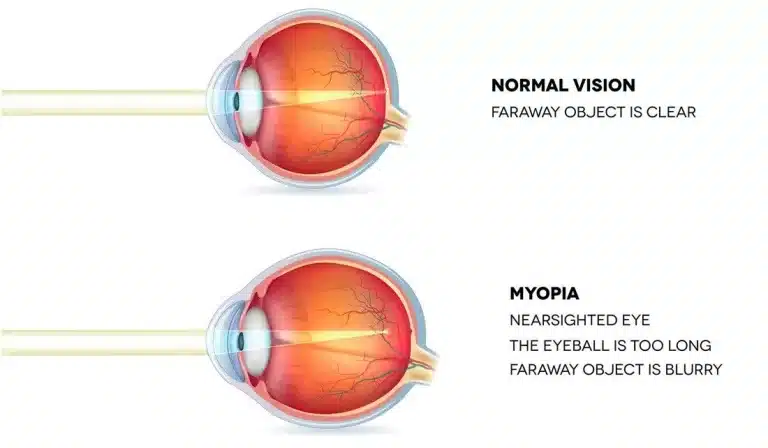
Orthokeratology, also referred to as corneal reshaping treatment, is “a non-surgical vision correction alternative,” says Rodney. Corneal reshaping (CR) is a therapeutic process that reshapes the cornea using reverse geometry contact lenses. This flattens the cornea to reduce nearsightedness.
Current safety note: Age alone does not establish suitability. Ortho-K requires individual fitting and follow-up, and overnight contact-lens wear carries risks including corneal infection and ulceration.
There is “no age barrier to this procedure as it is safe for both children and adults,” says Rodney. The non-surgical vision correction procedure can correct refractive errors such as mild to moderate and even large (in some cases) myopia, hyperopia and astigmatism. Ortho-K is safe and effective for children as it has been proven to treat myopia effectively. Evidence-based practice has made the process very safe provided a minimum standard of care is followed. This includes regular checks with your orthokeratologist, tap water never used on the lenses or case at any time, hydrogen peroxide disinfection, 12 monthly lens replacement, and a perfectly fitted lens from an experienced orthokeratologist. The procedure is not effective on certain shaped corneas. “Ortho-K is also suitable for sportsmen and women, swimmers, and simply those who do not wish to wear glasses or contact lenses,” says Rodney.
Ortho-K may provide useful unaided daytime vision for suitable patients and its corneal effect is reversible, but it is not risk-free because it involves overnight contact-lens wear. In children with progressing myopia, selected Ortho-K designs can be considered as one myopia-control option; the amount of progression slowing varies between individuals and is not guaranteed.
The Ortho-K gradually reshapes the front surface of the cornea to reduce myopia, hyperopia and astigmatism. The vision retainer is similar to contact lenses, but are worn at night while sleeping.
While asleep, “the lens uses the force of the eyelid and tear fluid beneath the lens to reshape the top of the cornea,” says Rodney. Upon awakening the patient’s vision remains clear throughout the day, without using contact lenses or glasses.
“This procedure is non-surgical vision correction is painless and reversible,” says Rodney. Ortho-K does not permanently change the shape of the eye. “The eye shape will revert to its original state within one to two weeks if the lenses are no longer worn,” says Rodney. However, improvements are visible the day after, and the procedure stabilises after a week. The process for high myopia, astigmatism and hyperopia, can take up to two to four weeks to achieve full correction.
The Ortho-K lens “offers relief from problems associated with contact lenses, such as dry eyes, and dust that may get trapped in and under the contact lens,” says Rodney.
Smart Vision Optometry clinics are located in Sydney. Book a Smart Vision Comprehensive Vision Skills Assessment or Advanced Eye Health Test for any child or adult by calling the Mosman clinic (02) 9969 1600 or the Bondi clinic (02) 9365 5047, alternatively book an appointment online.
Current evidence and clinical context
The US FDA’s LASIK guidance describes LASIK as surgery that permanently changes corneal shape using a laser. Refractive surgery can reduce dependence on glasses or contact lenses for selected adults, but it has limitations and potential complications, including dry eye, glare, halos, under- or over-correction and, rarely, serious loss of vision.
Orthokeratology is different: it uses rigid gas-permeable contact lenses worn overnight to temporarily reshape the cornea. The effect is reversible and requires continued lens wear. The FDA’s contact-lens safety guidance notes that contact lenses can cause serious infections and corneal ulcers; overnight wear increases the importance of hygiene, fitting and follow-up.
For children with progressing myopia, correcting blur and slowing progression are separate goals. Suitability for myopia-management options depends on age, prescription, progression, eye health and practical factors; no option guarantees that progression will stop.
Related Smart Vision reading
Orthokeratology · Ortho-K lens care · Myopia control and management
Frequently asked questions
Is Ortho-K a type of eye surgery?
No. Ortho-K uses specially fitted contact lenses worn overnight to temporarily reshape the cornea. It does not surgically remove or permanently alter corneal tissue.
Is Ortho-K risk-free because it is non-surgical?
No. It is still contact-lens wear, including overnight wear, so infection, corneal injury and other complications are possible. Correct fitting, hygiene and follow-up are important.
Does LASIK stop childhood myopia from progressing?
No. LASIK is refractive surgery intended to change the eye’s focusing power. It is not a childhood myopia-control treatment and FDA-approved LASIK is for adults.