Published: 17 February 2016 | Updated: 30 September 2026 | Author: Smart Vision Optometry
Editorial and clinical update — 30 September 2026: The original article below is preserved from the verified pre-edit source, including its wording and editorial structure. Neuroplasticity is a real feature of the nervous system, but broad claims that one exercise or training programme will improve unrelated cognitive, learning or academic outcomes require direct evidence. Current evidence and guidance below should be relied on where older wording differs.
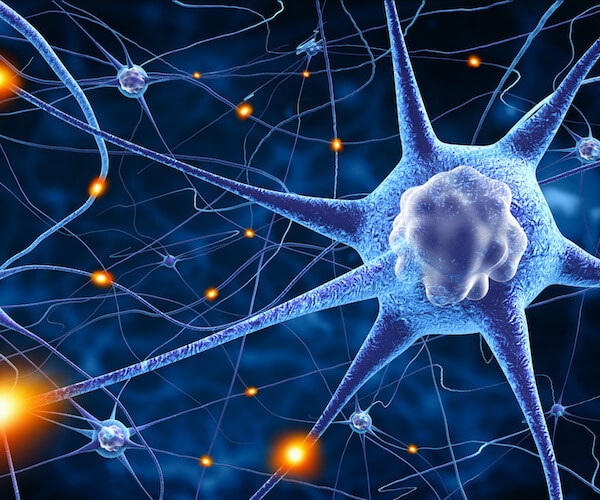
Safely tucked away within your skull is one of the most remarkable, complex organs in your body – your brain! Although there is much we are yet to discover about the brain, scientists have revealed an interesting ability of the brain that can change the way we behave and learn. Previously it was once thought our neural pathways and processes were fixed and unchangeable, but scientists now know these neural pathways can respond and adapt to experience and needs (1). This exciting phenomenon of a changeable brain is known as neuroplasticity and it is incredible.
FANTASTIC NEUROPLASTIC
I can change my mind, so what?
Our brain is responsible to innervate physical movement and govern conscious thought, but it is also responsible for innumerable unconscious cognitive processes including memory, perception, language and learning (2). This knowledge combined with the discovery of neuroplasticity has led to an ‘explosion of interest in the power of brain training to improve our focus, memory, attention and performance‘ (3).
Brain training?
Imagine you have commenced learning the piano, you are slow and clumsy. After consistent practice over a couple of days, your improvement is apparent. All those neurons that had to fire repeatedly in your brain have practiced, too. Each time they’ve fired, the stronger the connection has become. As you become more proficient with practice, the more distant neurons become ‘rich, well-organised neural networks’ (4). After a few years, if we were to study in your brain, your cortical “map” would have changed and your brain would reflect improvements in dexterity and auditory processing and spatial, verbal and mathematical performance. It would also make your brain more resistant to age-related degeneration (5).
I don’t want to learn the piano, how else could I benefit?
Every moment we are learning, we create opportunity for the brain to stabilise and reinforce new skills. However, the benefits of neuroplasticity are not just limited to new skills. Each time your brain strengthens a connection to advance your mastery of a skill, it weakens other neuronal connections that weren’t used at that precise moment – this is a negative plastic change.
Oh no! What if my brain weakens important neuronal connections?
While the negative plastic change suppresses “noise” (irrelevant, interfering activity in the brain), brain plasticity is a two-way street; it is just as easy to generate negative changes as it is positive ones. For instance, a child that constantly tilts their head to the left when reading is changing the neuronal densities in their visual pathways and processing. By not using both eyes effectively, they are contributing to eye strain and physiological vision problems, inefficient visual processing and, consequentially, impeding their learning and academic performance.
Funny you say that, while my child doesn’t do that exactly I have noticed them…
At Smart Vision Optometry, vision, visual information processing and neuroplasticity are deeply embedded within the kind of work we do. Our patients learn new skills to create vision and visual information processing proficiencies and practice activities to disrupt any negative changes that they have reinforced. We work with people and their brains – and neuroplasticity is the foundation of a lot of our work. Lots of our patients are children, because how they use their brain and their neural processing is critical. Achieving mastery of relevant skills can contribute to effective learning and academic performance at a formative time during their formal education.
Sounds serious.
It absolutely is! But it doesn’t mean it can’t be fun. If you’re in one of the waiting rooms of our practice you’ll only hear laughter. You may even get a glimpse of balloons or a therapist and a child crawling around like spiders on the floor, encouraging bilateral integration and building a fun foundation for higher order processing.
Read a review of the NRV published at the Journal of Behavioural Optometry.
(1) Malcom, L., (2015) Neuroplasticity: how the brain can heal itself. Retrieved October 9, 2015 from www.abc.net.au/radionational/programs/allinthemind/neuroplasticity-and-how-the-brain-can-heal-itself/6406736
(2) Kilhstrom, J. F., (2007) Cognition, unconscious processes. Retrieved October 9, 2015 from www.baars-gage.com/furtherreadinginstructors/Chapter08/Chapter8_Cognitive_Unconscious.pdf
(3) Malcom, L., (2015) Neuroplasticity: how the brain can heal itself. Retrieved October 9, 2015 from www.abc.net.au/radionational/programs/allinthemind/neuroplasticity-and-how-the-brain-can-heal-itself/6406736
(4) McKay, S, (2015) Neuroplasticity: can you rewire your brain?. Retrieved October 9, 2015 from www.activememory.com/news/2015/neuroplasticity-can-you-rewire-your-brain
(5) McKay, S, (2015) Neuroplasticity: can you rewire your brain?. Retrieved October 9, 2015 from www.activememory.com/news/2015/neuroplasticity-can-you-rewire-your-brain
Current evidence and clinical context
A 2026 systematic review of rapid structural brain plasticity describes measurable experience-dependent brain changes across learning, motor, perceptual and other tasks. Neuroplasticity therefore supports the general principle that the brain can adapt to experience; it does not establish the effectiveness of every proposed training programme.
A review of training-induced learning and transfer notes that learning is often specific to the trained task and may show limited transfer to other tasks. For vision care, AAPOS guidance on vision therapy distinguishes treatment of selected diagnosed eye-movement or binocular problems from behavioural or perceptual training claims for learning disabilities.
Related Smart Vision reading
Vision therapy and its evidence · Sight and vision · Neuro-vision rehabilitation information
Frequently asked questions
What is neuroplasticity?
Neuroplasticity is the nervous system’s ability to change its structure or function in response to experience, learning, development or injury.
Does improvement on one training task automatically transfer to other abilities?
No. Practice can improve a trained skill, but transfer to different skills or everyday outcomes varies and must be demonstrated rather than assumed.
Does neuroplasticity prove that vision therapy improves learning or school performance?
No. Neuroplasticity is a biological mechanism, not proof that a particular programme produces a specific educational outcome. Any treatment claim needs evidence for the condition and outcome being treated.