Published: 19 March 2021 | Updated: 28 September 2026 | Author: Smart Vision Optometry
Editorial and clinical update — 28 September 2026: The original article/interview body below is retained in its editorial form, including its attributed quotations and narrative structure. Current evidence and clinical guidance are presented separately below and should be relied on where older wording or claims differ.
A good deal of mystery still revolves around the link between vision misalignment and anxiety problems, but what is clear is that there is one, and it’s not a healthy relationship for either of them, according to Australian behavioural optometrist Jacqueline Gattegno. She says while these problems are very different, they are similar in how they operate, and in the way they negatively affect how people see reality. And when working in tandem, they can increase both the perceptual distortion and the anxiety levels which result from it.
A Vicious Cycle of Anxiety and Distortion
She says the strange relationship creates a vicious cycle in which those living and seeing in anxiety’s mental world, comprised of threats, fear, and the stress these create, can add strain and various levels of vision anxiety to the challenges already facing those whose eyes are misaligned and therefore unable to work efficiently as a team. This vision problem, which also affects how people see their world, can, in return, increase the levels of anxiety in the already anxious.
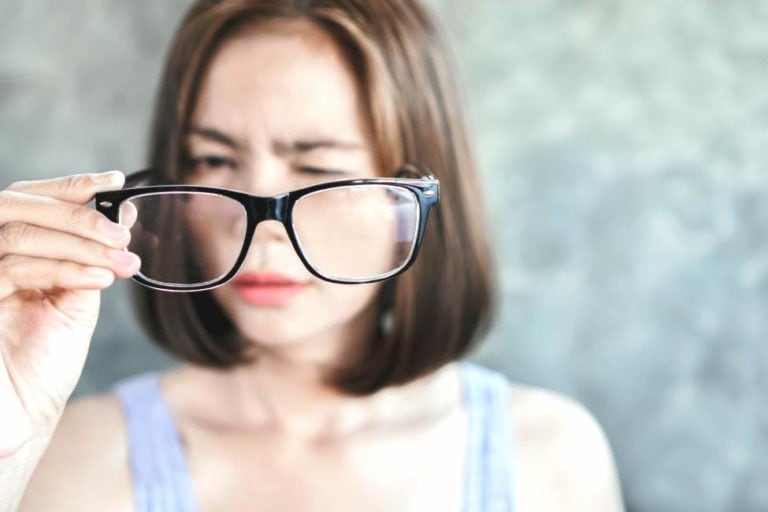
According to Gattegno, vision anxiety shows itself in visual symptoms which include light-sensitivity; double-vision; blurs, floaters and shadows; short shifts in brightness; distorted images; and seeing non-existent shapes which may or may not appear to be moving.
Like anxiety disorders and even occasional stress, vision anxiety can occur before, during or after a particularly challenging period or any change in stress levels. It can also appear out of nowhere, stay for a short or long time, and disappear often or occasionally, only to return at another time. It can always affect the same eye, shift from one eye to the other and back, or affect both eyes simultaneously every time.
Anxiety and Eye Misalignments Impact on Perception
“Anxiety changes people’s perception of life, the world and their place in it, and leads to increased feelings of disorientation and confusion, as well as leading to a sense of being overwhelmed, all of which can have an impact on perceptual vision. This, in turn, can affect the visual system, and especially do so when the eyes already have their own form of perceptual dysfunction caused by eye misalignment,” Gattegno says.
“80% of the information we receive about the world, life, and sense of place are processed through the visual pathway. But when there is misalignment the chances are strong that this information would be compromised.”
She says the body’s visual system is based on the eyes working in sync with each other , with each eye sending its own data on what’s seen to the brain for processing into a single understandable image that’s processed by the mind. But when the eyes don’t work in sync, their individual ‘reports’ may differ, and affect or distort the processing so much that the information from the weaker eye (or both) may be discarded by the brain as being irrelevant and senseless. This, in turn, can affect people’s perception of what they see, and raise the levels of confusion and disorientation which lead to feelings of anxiety and alienation.
Eye Misalignment: A Mysterious Problem
To see well, the eyes need to act as a team which look in the same direction and focuses on the same object. But eye misalignment, one of the most common eye problems faced by children, and affecting around 4 percent of them under 6, can’t do that. Instead it causes one eye, (sometimes both, and less often, alternating eyes) to turn inwards towards the nose, or away from it; look upwards or downwards instead of straight ahead; and in some instances, to move in more than one of those directions at the same time.
Gattegno says the mystery lies in what causes misalignment. Suggested reasons vary from high levels of farsightedness and thyroid eye disease, to injuries, cranial nerve palsies, and birth, brain or eye development problems. And it’s said to occasionally be a mixture of more than one of these.
Cutting the Bond
Several options are available for treating eye misalignments, including vision therapy, which uses a structured program of training to improve eye coordination and the teamwork between the brain and the eyes; as well as glasses, contact lenses, prism lenses, and eye muscle surgery.
However, she said that although correcting misalignments (and other eye problems) may reduce or remove vision anxiety, it will not cure the anxiety disorder or stress that appears to increase its impact. That requires rest, relaxation, and therapy of a different kind, aimed at treating the disorder itself.
For more information on vision therapy, or to book an appointment for a visual perception test online, visit the Smart Vision website: Optometrists Sydney: Optometry Services For Children and Adults | Smart Vision; for specific information about Myopia treatment and prevention visit Myopia Prevention: Solutions, Control And Treatment In Sydney; and for detailed information about Myopia Treatment visit Orthokeratology In Sydney: The Non Surgical Alternative.
Book an appointment for a thorough eye check-up or Call the Bondi clinic on (02) 9365 5047 or the Mosman clinic on (02) 9969 1600.
Current evidence and clinical context
The American Association for Pediatric Ophthalmology and Strabismus (AAPOS) explains that new adult misalignment can have several underlying causes and may require specialist investigation. A sudden change should not be put down to stress without assessment.
Seek urgent medical assessment for sudden double vision, sudden blurred vision or loss of vision. If a vision change occurs with facial drooping, one-sided weakness or slurred speech, call 000. Do not wait for a routine eye appointment or assume anxiety explains the change. Healthdirect’s blurred-vision guidance describes these warning signs.
The first question is the diagnosis, rather than which treatment to buy. AAPOS distinguishes double vision affecting one eye from double vision caused by the two eyes not working together. An assessment of double vision can include clarity, pupils, eye health, eye movements and alignment. The clinician decides whether medical investigation or referral is needed.
If worry is persistent, overwhelming or interfering with sleep, work or relationships, speak with a GP. Healthdirect’s anxiety guidance describes support that can include psychological therapy, lifestyle measures and medicines where appropriate. Eye care and mental-health care can proceed together.
Related reading
guide to the eyes, brain and mental imagery; functional-vision guide; stress and vision guide.
Frequently asked questions
Does anxiety prove that my eyes are misaligned?
No. Anxiety symptoms do not diagnose strabismus. An eye examination is needed to assess alignment and investigate visual symptoms.
Will correcting eye alignment cure an anxiety disorder?
An improvement in visual function is not a guaranteed cure for anxiety. Ongoing anxiety needs appropriate assessment and support in its own right.
Should sudden double vision wait for a routine appointment?
No. Sudden double vision needs urgent medical assessment, rather than an assumption that it is caused by stress.
Discuss eye symptoms in Bondi Beach or Mosman
For non-emergency concerns, contact our Bondi Beach practice or Mosman practice. Explain when symptoms began so the team can advise on the appropriate next step. Use urgent medical care for the warning signs above.