
Published: 16 February 2026 | Updated: 29 September 2026 | Author: Smart Vision Optometry
Editorial and clinical update — 29 September 2026: The original article/interview body below is retained in its editorial form, including its attributed quotations and narrative structure. Current evidence and clinical guidance are presented separately below and should be relied on where older wording or claims differ.
The Role of Vision in High‑Demand Environments
Whether you’re an athlete, a shift‑worker, a driver or someone whose job places high demands on visual performance, the quality and function of your visual system matter. At Smart Vision Optometry (SVO), the team build performance‑based wellness programmes tailored to each individual’s visual demands.
“Vision isn’t just clarity—it’s speed, coordination, depth perception, reaction time and stamina,” says Gary Rodney, founder and creator of Smart Vision Optometry, Master of Optometry, Behavioural Optometrist and Fellow of the International Academy of Orthokeratology and Myopia Control (FIAOMC).
Jacquie Gattegno, Orthokeratologist and Principal Optometrist at Eyes InDesign Smart Vision Optometry Bondi adds: “From athletes tracking a ball at high speed, to professionals managing long night‑shifts under artificial lighting—everyone deserves a vision plan aligned to their lifestyle.”
Background & Research
Vision science has evolved to recognise that beyond 20/20 vision, functional vision skills like eye–hand coordination, peripheral awareness, eye‑tracking, and visual reaction time are key to performance. Behavioural optometry adopts training and enhancement of these skills, and research supports that improvements in these areas translate to better performance and reduced visual fatigue. Gary comments: “We pair technology, testing and targeted training to develop these advanced visual skills.”
Jacquie adds: “Especially in demanding roles, visual fatigue or sub‑optimal coordination can create errors, slow performance and increase risk. A targeted wellness plan mitigates that.”
SVO’s Customised Vision Performance Programme
Detailed Performance Assessment
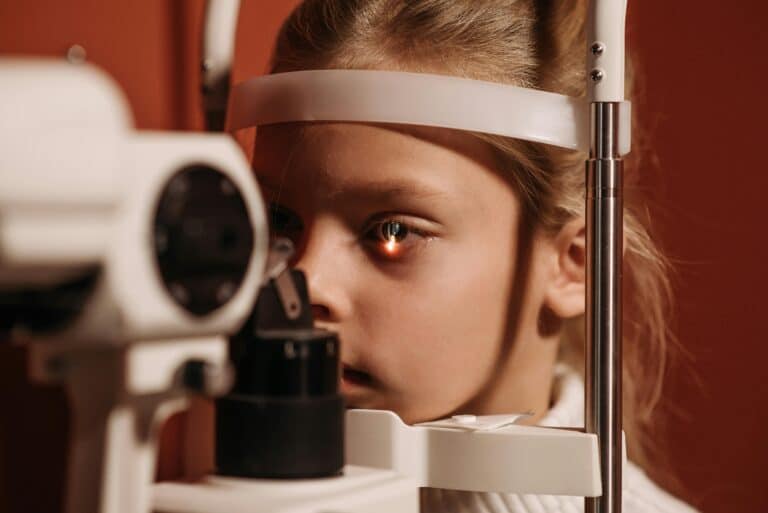
The journey starts with a comprehensive assessment. Gary says: “We evaluate not just acuity, but eye‑tracking, saccades, reaction speed, depth perception, contrast sensitivity, binocular vision and visual endurance under realistic conditions.”
Jacquie expands: “We incorporate lifestyle assessment: what sport you do, what your job demands, the lighting you work under, screen time, shift‑patterns, environment. That’s how we build relevance into the plan.”
Tailored Training & Correction Strategy
Based on the assessment, SVO designs a plan. Gary says: “It may involve specialised lenses, visual training exercises, simulation tasks, ergonomic and lighting adjustments, plus ongoing monitoring.”
Jacquie explains: “For example an athlete might train eye‑tracking drills, contrast‑sensitivity tasks, peripheral awareness; for a night‑shift professional we might address glare, low‑light vision, monitor use and fatigue mitigation.”
Review, Adaptation & Integration
A hallmark of the programme is ongoing review. Gary says: “We follow up with reassessment, adjust training load, coordinate with coaches or occupational specialists, and measure how vision improvement translates into performance.”
Jacquie emphasises: “We make sure the plan fits into your daily routines and doesn’t feel like extra burden—it becomes integrated into your lifestyle.”
Benefits in Real Life Contexts
Sporting Performance
In sport, milliseconds count. Jacquie says: “When an athlete improves visual reaction time, tracking a fast‑ball or planning a pass becomes more natural. We’ve seen greater confidence and fewer visual errors under pressure.”
Gary adds: “It’s not about spectacle frames—it’s about vision that supports peak performance.”
Occupational Vision Demands
Shift‑workers, drivers, pilots, those with screen‑heavy jobs: vision fatigue, glare sensitivity, poor depth perception can create safety and performance issues. Jacquie says: “We customise visual wellness plans for these roles — glare reduction, contrast optimisation, visual endurance. The difference shows up in comfort, alertness and performance.”
Gary agrees: “Everyone deserves vision that supports their work, not hinders it.”
Everyday Visual Confidence
Even outside elite sport or specialist roles, everyday demands add up. Jacquie says: “Reading on a moving bus, driving at dusk, switching rapidly between devices and documents—these are vision loads. A tailored plan reduces discomfort and strain.”
Gary concludes: “When we build in the real‑world environment, you’re not just getting clearer vision—you’re getting better visual performance across life.”
Practical Steps & Expectations
- Identify your demands: What do you see, when, how and under what conditions?
- Book a performance‑focused vision assessment with SVO and specify your lifestyle or occupational needs.
- Ask for a plan that maps to your real world (sport, work, driving, night use).
- Commit to training, review and monitoring — the plan evolves with you.
- Reap the benefits: better visual performance, less fatigue, improved comfort, increased confidence.
Why Personalised Vision‑Performance Care?
Gary says: “Because vision‑demand is unique to the individual. Generic solutions may correct clarity but ignore the performance dimension.”
Jacquie explains: “We partner with you — we listen to your lifestyle, integrate your demands and build a vision‑wellness plan that supports your personal goals.”
With SVO you’re not just seeing better — you’re performing better.
Steps To Get Started
If you’re involved in sport, work with high visual demands, or simply want vision that supports your lifestyle, book a performance‑vision assessment with Smart Vision Optometry today.Start your customised vision‑wellness plan now and elevate your visual performance. Book an appointment, or call the Bondi clinic on (02) 9365 5047 or the Mosman clinic on (02) 9969 1600.
Current evidence and clinical context
Healthdirect describes tests of visual acuity, eye movements, coordination and eye health. Assessment can help identify which findings need attention; the interview’s broad performance claims do not establish a benefit for every sport or occupation.
The National Eye Institute’s protective-eyewear guidance emphasises protection suited to the activity. Training should not be presented as a substitute for protective equipment or the applicable occupational and driving standards.
Related Smart Vision reading
A comprehensive approach to vision · Adult visual comfort
Frequently asked questions
What should I bring to a sport or work vision assessment?
Describe the activity, viewing distances, lighting, symptoms and relevant safety requirements. Bring details of your usual eyewear.
Does better performance on a vision exercise prove better performance at work or in sport?
No. Those are different outcomes. Ask what evidence supports the proposed programme and how relevant progress will be measured.
Can visual training replace protective eyewear?
No. Use protective equipment appropriate to the activity and follow applicable sport or workplace safety requirements.