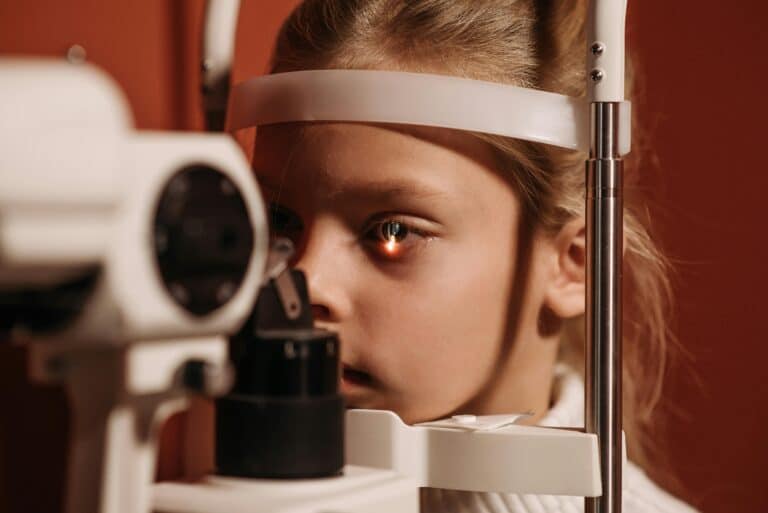

Published: 18 August 2020 | Updated: 30 September 2026 | Author: Smart Vision Optometry
Editorial and clinical update — 30 September 2026: The original article/interview below is preserved, including its attributed quotations and editorial structure. Current evidence and guidance below should be relied on where older wording differs.
Most people find it hard enough just to keep track of their everyday lives with all the pressures, demands, and to-do lists associated with it. And that’s merely keeping up to date with routines. It’s way harder for one in four of the global population, whose eyes can’t team up enough to track what they are seeing at any given time. And that’s with regard to everything they see, but it’s specially so when they’re trying to read, or make sense of where and how fast a moving ball is going, according to Gary Rodney, Australian Master of Optometry and Fellow of the International Academy of Orthokeratology and Myopia Control (FIAOMC).
Rodney says it is quite normal that faces are not always the same shape on both sides, usually people’s ears aren’t either, and chances are that a person’s eyes will also not be identical in shape or size. And they may have a certain amount of difference in their refractive powers. But this becomes a problem if the eyes function even slightly out of sync and move and focus differently. This can lead to problems with vision, physical health, learning, and perception, and it can possibly leave a person uncertain of their physical place in, and relationship to, the world.
When the Messages Get Confused
Among the most common of deficits in students’ vision skills, eye tracking (also called ocular motility or oculomotor function) concerns the two eyes’ ability to move up and down and from side to side simultaneously, and shift their eye alignment accurately from one object to another in a way that the two eyes can provide an understandable single visual image between them, says Rodney.
The effort required in the brain to make this happen can have huge impacts on concentration levels and abilities to process information at a higher level in the brain. Poor functional vision skills can impact in the same way making it difficult to carry on a conversation and ride a bicycle up a hill. How the eyes collaborate (or don’t) with one another in terms of these movements, can completely change the way a person sees, as well as how much they understand or perceive of what they are seeing.
Total teamwork is necessary because the data about what is being seen is received from light rays which enter each eye individually, and each send separate electrochemical messages to the brain for processing. These are seen by the brain as two different views of the same object and blended into one image. If the two eyes don’t project the same data about the colour, location and texture as well as other means of reference used by the brain, this could lead to confusion, distraction and inability to get a meaningful understanding of what is being seen.
Results of Tracking Dysfunction
When eyes aren’t able to operate as a team a long list of health issues and a great deal of discomfort may follow in the form of acknowledged symptoms like nausea, headaches, dizziness, light sensitivity, and blurry vision; as well as feelings of disorientation and being off balance when walking, which may lead to clumsiness or a tendency to bump into things. Pain in the face and neck are also commonly experienced, and the eyes themselves may be sore due to the strain put on them during the struggle to balance their focus.
Eye teaming and eye tracking problems can also lead to learning and reading issues, impacting on fluency, comprehension and speed when reading. This may result in misdiagnoses when it comes to learning difficulties such as dyslexia, which could toughen the chances of effective treatment for about one of every three who have been diagnosed with dyslexia.
If any of the following patterns are adopted they could be possible signs that a child has eye tracking problems, which, according to Rodney, can only really be identified through in-depth testing.
- Eye Teaming deficits may cause text or individual words to appear to “float” or “move” on the page because of the viewer’s inability to focus properly when eye movement is involved.
- Reaction to Reading: If children are overwhelmed by pages of text; avoid or resist reading; and prefer to be read to, rather than read themselves; they may have tracking difficulties. When they do read, they may find it easier to do so if the font is large, but have a slow and halting reading pattern when they read out loud.
- Physical Response to Reading: Those with tracking problems may squint or rub their eyes frequently, tilt their heads or move them from side to side, and/or use their finger as a guide to keep track of where they are in the text when reading.
- Outcome In Reading: They may guess at words they can’t identify, and lose their place when reading, writing, or copying (especially when their eyes are in the return sweep phase). Other tell-tale signs are if they leave out or transpose words or sentences when reading ( particularly if the words are small or similar), or they tend to re-read words or sentences.
- Writing: Signs there might be problems include poor handwriting, inaccuracy when it comes to word endings, low awareness of punctuation, and a tendency to reverse words or letters. Those with tracking issues may also they have difficulty when copying from the white board.
- Sports: Poor sports performance (particularly when playing games which involve moving objects, may also be a result of tracking difficulties.
For more information visit the Smart Vision website: Optometrists Sydney: Optometry Services For Children and Adults | Smart Vision; for specific information about Myopia treatment and prevention visit Myopia Prevention: Solutions, Control And Treatment In Sydney; and for detailed information about Myopia Treatment visit Orthokeratology In Sydney: The Non Surgical Alternative.
Book an appointment for a thorough eye check-up or Call the Bondi clinic on (02) 9365 5047 or the Mosman clinic on (02) 9969 1600.
Current evidence and clinical context
AAPOS learning guidance separates ocular care from treatment of learning disabilities.
The interview’s one-in-four prevalence and dyslexia-misdiagnosis proportions are not established here. Broad symptom lists are not diagnostic tests; persistent dizziness, double vision or reading difficulty may need assessment beyond eye tracking.
Related Smart Vision reading
Eye-teaming assessment · Learning concerns
Frequently asked questions
Does losing place when reading prove a tracking disorder?
No. It can have several explanations.
Can a symptom checklist replace an examination?
No. Findings need appropriate assessment.
Should dyslexia support stop during eye treatment?
No. Continue appropriate literacy support.